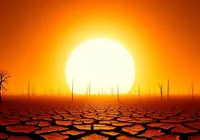
What If Earth's Rotation Slowed by Half?
• 7 min read
48-hour days. Scorching 24-hour daylight followed by freezing 24-hour nights. Weather systems rewrite themselves. Agriculture collapses.
• 7 min read
48-hour days. Scorching 24-hour daylight followed by freezing 24-hour nights. Weather systems rewrite themselves. Agriculture collapses.
• 7 min read
Twelve hours of light, twelve of dark, every single day. No seasons, no summer evenings, no winter darkness — and an eerily predictable world.
• 7 min read
Pressure doubles, sound travels further, sunsets last for hours, and humans could strap on wings and actually fly under their own power.
• 7 min read
Liquid courage on tap. Bottled joy for a tenner. Contentment as a subscription service. Addiction takes on an entirely new dimension.
• 7 min read
A breathable atmosphere, liquid water, and arable soil on Mars — ready to colonise. The question isn't can we go. It's who decides who gets to.
• 7 min read
Eighty-five percent of the universe's mass appears overnight. The night sky fills with structures we never knew existed. Physics gets a very busy week.

• 7 min read
Send the copy to work. But which one is the real you? And does the copy get a vote? Existential dread meets HR policy.

• 7 min read
Without penicillin, every wound is potentially fatal. Surgery is a gamble. Life expectancy stays pinned at 50. Modern medicine simply doesn't exist.
• 7 min read
Thunder arrives with the lightning. Echoes vanish. Music sounds identical everywhere in a concert hall. Sonic booms become gentle pops.
• 7 min read
The magnetic field collapses. Solar radiation strips the atmosphere. Mars shows us exactly what that endgame looks like.
• 7 min read
Green-skinned humans lounging in sunlight instead of eating lunch. Offices install UV panels. Nightshift workers develop vitamin deficiencies on a new level.
• 7 min read
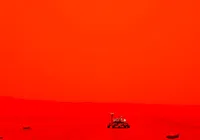
Every rover we've sent becomes a potential diplomatic incident. First contact happened years ago — we just never checked the voicemail.
• 6 min read
Aircraft can't fly through them. Sunlight becomes rationed. And one rain-heavy cumulonimbus crushes a city under a billion tonnes of solid water vapour.
• 7 min read
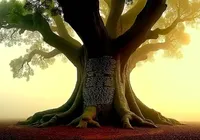
You'd have time for 12 careers, 8 marriages, and roughly 600 years of procrastination before your first midlife crisis at 500.
• 7 min read
Gravity increases by 40%, planes struggle to fly, skyscrapers can't stand, and humans evolve short and stocky.
• 7 min read
Routine surgery becomes a death sentence. A paper cut could kill you. Medicine rewinds to the 1920s overnight.
• 7 min read
Visible from every continent, casting shadows across entire countries, and making satellite launches exponentially harder.
• 7 min read
Insects grow to terrifying sizes, fires burn twice as fiercely, and every spark becomes a potential inferno.
• 6 min read
Wi-Fi routers would glow like bonfires. Mobile towers would be visible pillars of light. Cities would be blindingly bright and the countryside eerily dark.
• 7 min read
Permanent daylight on the summer solstice sounds idyllic — until crops burn, sleep cycles collapse, and nocturnal ecosystems die.
• 7 min read
Air molecules freeze solid, light stops reaching your eyes, and you suffocate in darkness. The physics ruins the fantasy almost immediately.
• 7 min read
You'd see people frozen mid-step as their photons crawled towards you. Sunsets would last weeks. GPS would be useless.

• 6 min read
Nutritionists have actually worked this out. The answer isn't pizza, but it's closer than you'd expect.

• 6 min read
Perfect memory sounds like a superpower until you realise you'd relive every embarrassing moment in HD forever.
• 6 min read
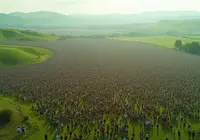
Eight billion people, one coordinated leap. Would the planet notice? The answer involves more crowd crush than cosmic physics.

• 6 min read
Green-skinned, sun-hungry humans who never need breakfast. How much energy would we actually get, and would it change civilisation?
• 7 min read
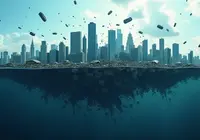
Everything not bolted down launches skyward. The oceans lift off the seabed. And that's just the first second.
• 7 min read
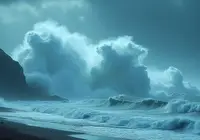
The Earth rotates at 1,670 km/h at the equator. If it stopped, the oceans wouldn't. That's the beginning of the problem.
• 6 min read
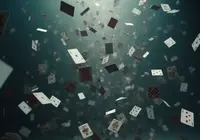
52 factorial is a number so large it breaks your intuition. Every shuffle you've ever done was probably a first — and a last.
• 7 min read
Tides shrink to a third, nights go properly dark, and Earth starts wobbling like a drunk compass. Here's what we lose.