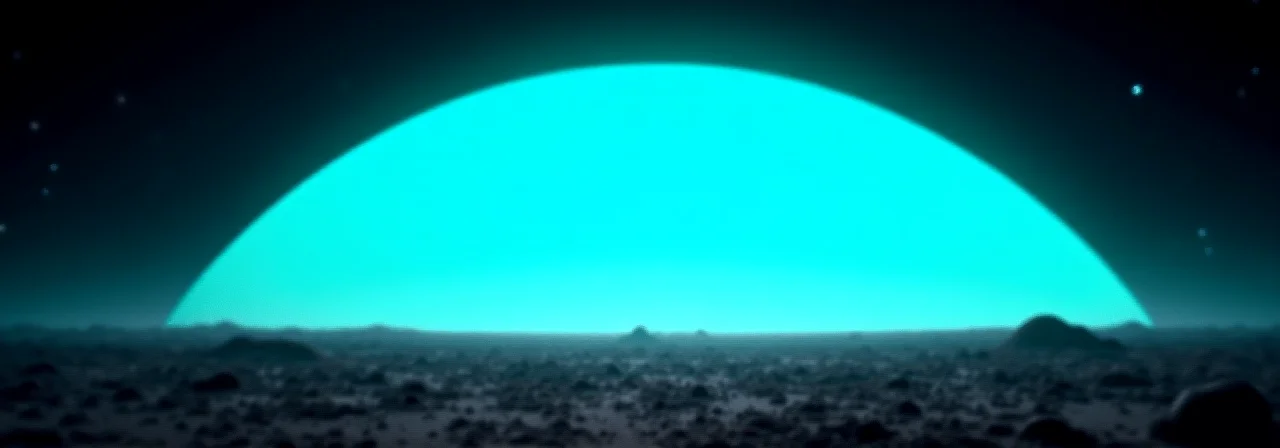
The telescope data comes in on a Tuesday. Some postdoc at the European Southern Observatory notices the atmospheric signature first: oxygen, nitrogen, water vapour, a whiff of methane. A rocky planet, 1.02 Earth masses, orbiting a G-type star 4.2 light-years away. Proxima Centauri's neighbourhood, which is convenient because it's the closest star system we have.
Habitable. Temperate. Liquid water confirmed.
And no radio signals. No city lights on the night side. No signs of intelligence whatsoever.
An empty second Earth, right next door (by cosmic standards). The most significant discovery in the history of our species, dropped into a world that can barely agree on climate targets.
The announcement
Within hours of publication, every government on the planet has a working group. Within days, the UN General Assembly holds an emergency session. Within weeks, the arguments start, and they never stop.
Who does this planet belong to?
The Outer Space Treaty of 1967, which 114 nations have ratified, says no country can claim sovereignty over celestial bodies. But the Outer Space Treaty was written when getting to the Moon was the ambitious bit. Nobody was thinking about a habitable planet with breathable air and arable land. A planet you could, in principle, walk around on in your shirtsleeves.
The treaty will hold for about fifteen minutes once someone figures out how to get there.
The journey problem
4.2 light-years is roughly 40 trillion kilometres. Our fastest spacecraft to date, the Parker Solar Probe, has hit 635,266 kilometres per hour. At that speed, the trip takes about 7,000 years. Unhelpful.
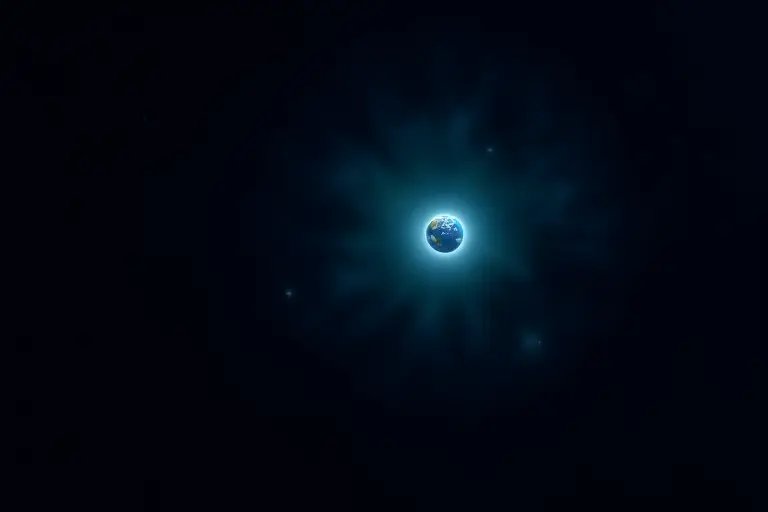
But let's be generous. Let's say the discovery triggers a Manhattan Project-scale engineering effort, and within twenty years we've built a ship capable of sustained 10% lightspeed travel. That puts the journey at 42 years. Still a lifetime. The people who board that ship in their twenties arrive in their sixties, assuming nothing goes wrong, which is an assumption that has never once survived contact with space travel.
You're not sending tourists. You're sending colonists who will never come home. Their children will grow up on a planet they've only seen through their parents' stories and whatever media they brought along. Earth becomes mythology within two generations.
Who gets a seat?
This is where it gets properly ugly. A colony ship can't carry billions. It can probably carry thousands, maybe tens of thousands if the engineering is ambitious. Which ten thousand people, out of eight billion, get to go?
The rational answer is obvious: geneticists, engineers, doctors, farmers, ecologists. People with skills essential to building a civilisation from scratch. You need enough genetic diversity to sustain a healthy population (the minimum viable number, according to anthropological models, is somewhere around 500 individuals, though 10,000 is safer). You need every critical discipline represented.
The political answer is different. Every nation will want seats. Rich nations will try to buy them. Poor nations will argue, correctly, that wealth shouldn't determine who survives if Earth faces future catastrophe. Religious groups will demand representation. Someone, inevitably, will suggest a lottery. Someone else will suggest an auction. Both ideas are terrible in different ways.
I suspect what actually happens is that multiple nations build their own ships. An American ship, a Chinese ship, a European consortium vessel. Each selects its own passengers by its own criteria. The colony planet gets settled by several groups who arrive decades apart, land on different continents, and spend the first century arguing about borders. Sound familiar?
What happens to Earth?
This is the part nobody talks about in the excitement. For every person who boards a colony ship, millions stay behind. The discovery of a second Earth doesn't fix climate change, doesn't end poverty, doesn't resolve any existing problem. What it does is create a psychological shift.
Earth stops being the only option. That changes everything and nothing simultaneously.
For the optimists, it's a backup. Humanity isn't all in one basket any more. An asteroid strike, a supervolcano, a runaway greenhouse effect, none of these are extinction-level if there's a second population elsewhere. That safety net might, counterintuitively, make us more reckless with this planet. Why sacrifice economic growth for conservation when we've got a spare?
For the pessimists (and I count myself closer to this camp), it's a distraction. The billionaire class would pour money into colony ships instead of fixing the planet they're standing on. It's the ultimate exit strategy. Wreck this one, move to the next. Earth becomes the house you trash because you're already looking at a new build.
First contact with an empty world
Forty-two years after launch, the first ship enters orbit. The colonists, now middle-aged, look down at an alien world that is breathtakingly, eerily Earthlike. Green landmasses. Blue oceans. White cloud patterns swirling over unfamiliar continents.
But nothing about it is the same up close. The plants aren't plants as we know them. They photosynthesise (the atmosphere tells us that much) but their biochemistry could be wildly different. Alien pollen, alien microbes, alien soil chemistry. The air is breathable but the food isn't edible. Every crop has to grow in imported Earth soil until the colonists figure out whether alien dirt will sustain terrestrial agriculture.
And that assumes the local biology doesn't kill them first. No human immune system has ever encountered these microorganisms. We'd be the Native Americans in this scenario, except there's nobody doing it to us deliberately. Just a biosphere that hasn't co-evolved with human bodies for four billion years.
The communication gap
At 4.2 light-years, a message from the colony takes 4.2 years to reach Earth. A reply takes another 4.2 years. Every conversation has an 8.4-year round trip. By the time Earth receives "We've landed safely," the colonists have been on the ground for over four years already. By the time Earth's congratulations arrive, the colony is nearly a decade old.
Within a generation, the colony is culturally independent. Their slang is different. Their priorities are different. Their problems (alien agriculture, unfamiliar weather patterns, figuring out which local organisms are poisonous) bear no resemblance to Earth's problems. They'll politely receive news from the home planet the way you might read about a distant relative's holiday: mildly interesting, largely irrelevant.
We'd have two human civilisations, diverging in real time, connected by a thread so thin it might as well be memory.