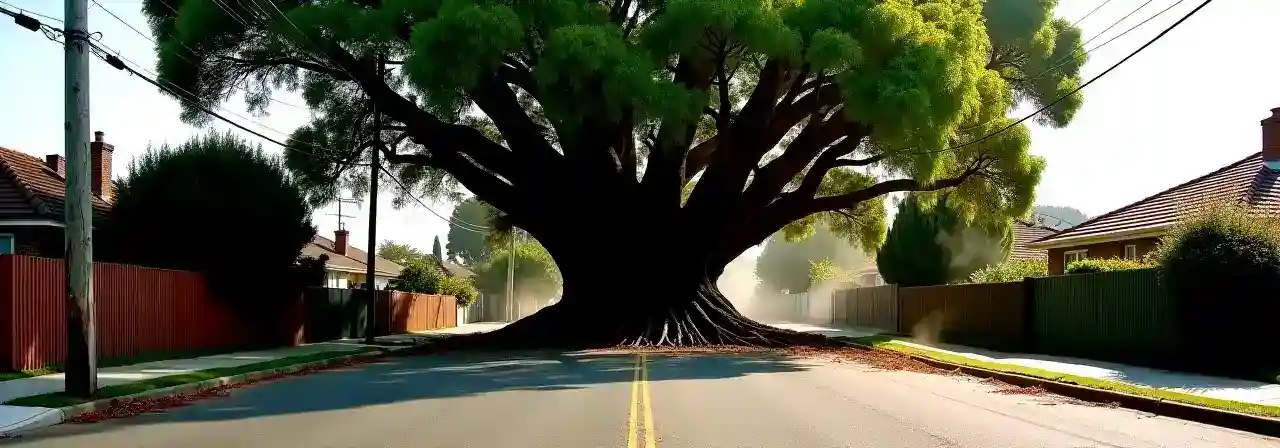
An English oak takes about 100 years to reach full maturity. It'll grow to 20-40 metres tall, develop a trunk you can't wrap your arms around, and produce roughly 70,000 acorns in a good year. The whole process is so slow that you could watch a single oak for your entire lifetime and barely notice the change from one decade to the next.
Now compress all of that into 24 hours.
Breakfast to lunch
You plant an acorn at 7am. By 8am, a seedling has broken the surface and it's already knee-high. The growth rate here is absurd: a mature oak is roughly 25 metres tall, so we're looking at just over one metre per hour. That's visible to the naked eye. You could sit on a garden chair and watch it happen, like a time-lapse video running in real time.
By noon, the tree is twelve metres tall and the trunk is thickening fast. The root system, which on a real oak extends roughly the same distance underground as the canopy does above, is tearing through soil at the same rate. Your garden fence is the first casualty. The patio goes next. Underground pipes don't stand a chance.
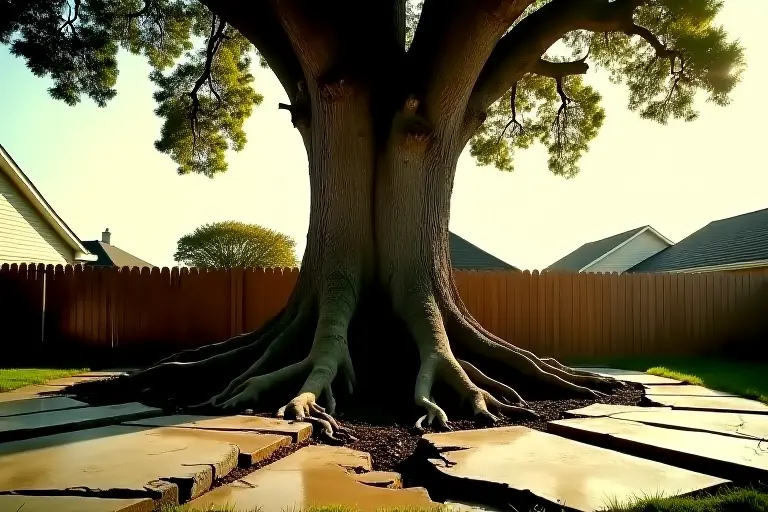
The energy required for this is staggering. A mature oak contains about 6 tonnes of carbon, pulled from CO₂ in the air via photosynthesis. Normally that takes a century. In one day, a single tree would need to process CO₂ at roughly 36,500 times the normal rate. The air around the tree would measurably thin of carbon dioxide. If you planted a few thousand of them in a field, you'd create a localised CO₂ vacuum.
The good news (briefly)
Deforestation would be solved overnight. Not gradually, not through decades of replanting programmes and carbon credits and international agreements that nobody honours. Just solved. Cut down a hectare of rainforest in the morning, replant it in the afternoon, and by tomorrow you've got a hectare of mature forest again. The Amazon could regenerate in a week.
Carbon capture stops being a theoretical engineering problem. Trees already capture carbon. If they grew this fast, the bottleneck disappears. Plant a billion seedlings across the Sahara (assuming you can irrigate them through that first day) and you've pulled millions of tonnes of CO₂ from the atmosphere before the weekend.
Timber becomes effectively unlimited. Need oak for furniture? Plant it Tuesday, fell it Wednesday. Need pine for construction? Same deal. The entire logging industry transforms from resource extraction to something closer to farming. No old-growth forest ever needs to be touched again, because new-growth forest is 24 hours away.
The bad news (at length)
Infrastructure is finished. Not damaged. Finished.
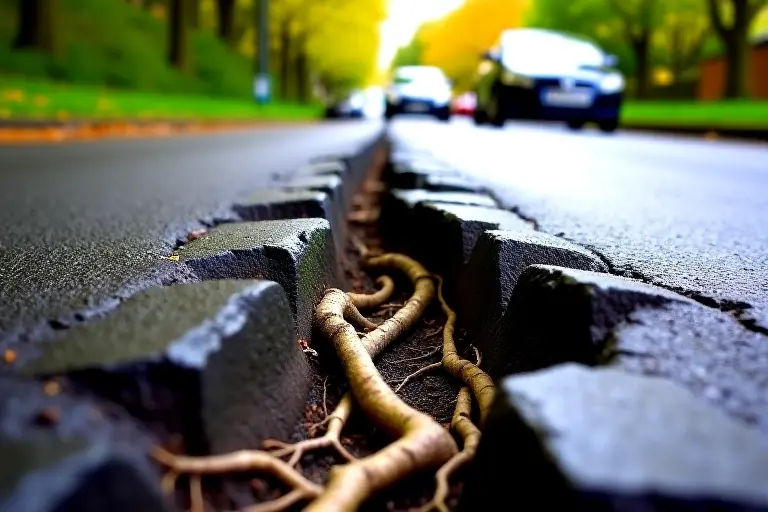
A single tree seed landing in a pavement crack would, within hours, produce a root system capable of ripping up an entire street. Every gutter, every drain, every gap between paving slabs becomes a potential launch site for something that grows faster than you can respond to it.
Roads would need constant patrol. Railway lines would need daily clearing. Airport runways would become forests if left unattended for a weekend. The whole concept of paved surfaces stops working when any windblown seed can undo them in a day.
Power lines are another disaster. Trees and overhead cables already have a fraught relationship; utility companies spend billions annually on vegetation management. With one-day growth, a sapling that sprouts near a power line at dawn brings down the cable by dusk. You'd need underground power everywhere, which is about ten times more expensive to install.
Buildings under siege
Any structure near soil is vulnerable. A seed lodging in a foundation crack, a gutter, a flat roof with accumulated leaf litter: that's a tree by tomorrow. Not a nuisance weed. A full-sized tree, with a root system that can split concrete and a trunk that can push walls apart.
Property insurance would become unaffordable. The risk model for "a 20-metre oak might grow through your conservatory overnight" doesn't produce a premium anyone can pay. Homeowners would spend their evenings on seed patrol, picking acorns and sycamore helicopters out of their guttering like some kind of botanical arms race.
You'd see a shift toward building materials and designs that resist root penetration. Sealed foundations. Metal-clad exteriors. Buildings raised on stilts above ground level. Architecture would start to look like it was designed to withstand a slow, green invasion. Which it would be.
Ecology goes haywire
Forest ecosystems depend on trees growing slowly. A canopy that takes decades to close gives ground-level plants time to establish, gives fungi time to build mycorrhizal networks, gives animal populations time to adapt to gradually changing habitat. Collapse that timeline to one day and the ecosystem doesn't form. You get a tree. You don't get a forest.
The soil wouldn't develop fast enough. A mature forest floor takes centuries of leaf litter decomposition to build up the rich humus layer that supports the wider ecosystem. One-day trees would drop leaves onto bare earth, and those leaves wouldn't decompose fast enough to matter before the next generation of trees was already fully grown on top of them.
Birds and insects that depend on specific tree stages (blossom for pollinators, deadwood for beetles, hollows for nesting) would find those stages lasting minutes instead of years. A woodpecker looking for a suitable dead branch would need impeccable timing.
Weaponised botany
Someone would weaponise it. I'm not being cynical; I'm being realistic. If you can grow a tree through anything in 24 hours, seeds become sabotage tools. Scatter acorns across an enemy airfield at night, and by morning the runway is a forest. Drop sycamore seeds over a city from a drone, and within a day every road is blocked by mature trees that would take heavy machinery to remove.
Countries would classify certain seeds as controlled materials. There'd be customs restrictions, border inspections, detection equipment. The phrase "biological weapon" takes on an entirely new meaning when the biology in question is a horse chestnut.
Farmers, on the other hand, would become the most powerful people alive. Anyone who understands what to plant, where, and how to control it has a skill worth more than any financial instrument. Your neighbourhood allotment enthusiast, the one who always has too many courgettes, becomes a strategic asset.