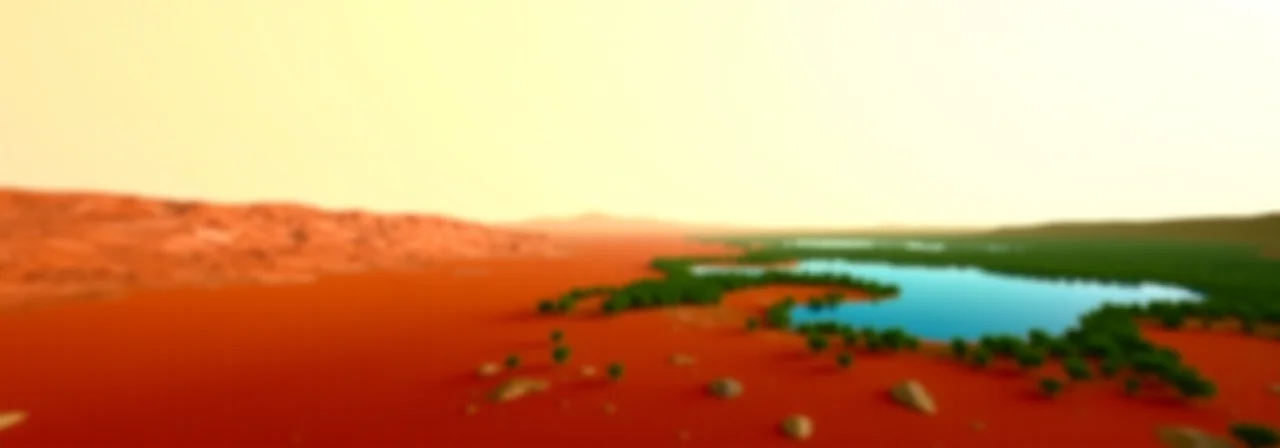
Not "we've started a three-hundred-year process." Not "we've planted some lichen under a dome." Tomorrow, Mars has a breathable atmosphere, liquid water, arable soil, and a stable surface temperature averaging about 15°C. Ready to walk on. Ready to farm. Ready to colonise.
The science fiction version of this moment is triumphant. Humanity's greatest achievement. A new frontier. The real version would be a geopolitical crisis before anyone packed a suitcase.
Who owns Mars
The Outer Space Treaty of 1967, signed by 114 countries, states that no nation can claim sovereignty over a celestial body. Mars belongs to everyone. Which, in practice, means it belongs to whoever gets there first with enough infrastructure to stay.
The moment Mars is habitable, that treaty comes under pressure it was never designed to withstand. It was written when space was expensive, dangerous, and decades away from colonisation. A habitable Mars changes the equation from theoretical to urgent. Countries that can afford Mars missions will argue the treaty needs "updating." Countries that can't will argue it needs enforcing.
The United States, China, and the European Space Agency have active Mars programmes. SpaceX has been talking about Mars colonisation for years. India's ISRO reached Mars orbit for $74 million in 2014, less than the budget of the film Gravity. Russia has ambitions but inconsistent funding. Private companies are already designing habitats, spacesuits, and closed-loop agricultural systems for Martian conditions.
All of these entities would immediately pivot from research to land-grab.
The first ships
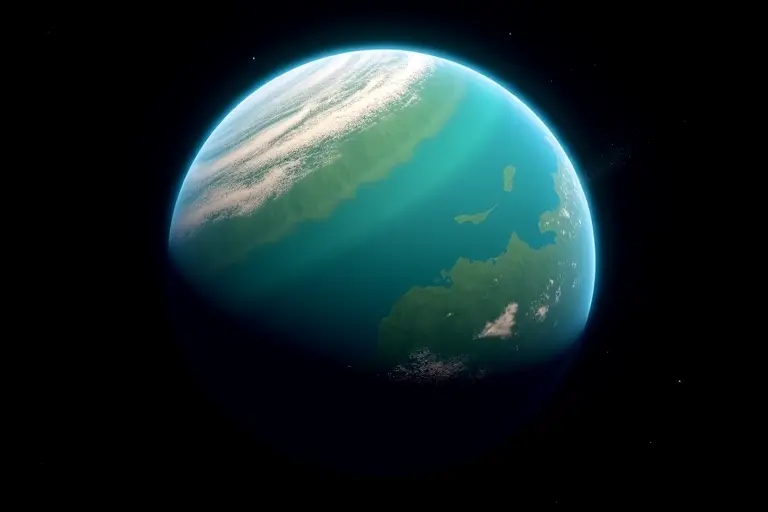
Current Mars transit time, using a Hohmann transfer orbit, is about nine months. With a habitable Mars waiting at the other end, the demand for faster transit would become politically and commercially urgent. Nuclear thermal propulsion could cut the journey to four months. Speculative technologies (nuclear pulse, plasma drives) could reduce it further.
But even at nine months, people would go. The first wave wouldn't be scientists or engineers. It would be a mix of government-sponsored colonists, corporate employees of whoever builds the first habitat complexes, and wealthy individuals who can afford a private ticket. Elon Musk has stated a target price of $100,000 per ticket to Mars. Whether or not that's achievable, the ballpark gives you the demographic: upper-middle-class professionals from wealthy nations.
Mars begins as a gated community.
Governance on arrival
Early Mars settlements would be company towns. The entity that builds your habitat, provides your oxygen (still needed indoors for pressurised structures, even with a breathable outdoor atmosphere at lower-than-Earth pressure), grows your food, and maintains your water recycling system holds absolute power over your life. You can't strike. You can't leave. You can't vote with your feet when the nearest alternative settlement is 2,000 kilometres of open terrain away.
History has done this experiment. Company towns in the American West, British mining villages, the Belgian Congo. The pattern is consistent: when a single entity controls both employment and essential services, exploitation follows. There is no reason to believe Mars would be different.
The legal framework doesn't exist. Martian colonists are citizens of their home countries, but Earth-based legal systems have no enforcement mechanism on Mars. If a corporation operating a Mars settlement violates labour laws, what happens? The aggrieved worker files a complaint with an Earth-based court that is nine months away by mail and has no police force within 55 million kilometres. Nothing happens. That's what.
The atmosphere problem
Even with terraforming complete, Mars is not Earth. Its surface gravity is 3.72 m/s², about 38% of Earth's. This has consequences for human physiology that we don't fully understand because nobody has lived in 0.38g for more than zero days.
We know what microgravity does. Astronauts on the ISS lose bone density at roughly 1-2% per month, experience muscle atrophy, fluid redistribution that affects vision, and cardiovascular changes. Partial gravity might reduce these effects but probably won't eliminate them. Children born on Mars would develop differently: taller, with less dense bones, with cardiovascular systems calibrated for lower gravity. After one generation, Martians may not be able to visit Earth without medical assistance.
Mars also has no global magnetic field. Earth's magnetosphere deflects solar radiation and cosmic rays. A breathable atmosphere would provide some radiation shielding (Earth's atmosphere absorbs most incoming radiation), but without a magnetic field, the atmosphere itself would slowly be stripped away by solar wind. Whoever terraformed Mars would need to have solved this problem, or the terraforming is temporary on geological timescales.
What it does to Earth
A habitable Mars creates a pressure valve for every political problem on Earth. Overcrowding? Send people to Mars. Resource depletion? Mine Mars. Political dissidents? They can go to Mars. Religious minorities, ethnic groups, ideological movements that don't fit the dominant culture. Mars becomes the new Australia, minus the indigenous population (presumably).
This sounds like a solution. It is a postponement.
Every systemic problem on Earth that could be addressed through policy change instead gets offloaded to a colony 225 million kilometres away. Climate change becomes less urgent when the wealthy can leave. Income inequality becomes less politically dangerous when the desperate have somewhere else to go. The people who remain on Earth are those who couldn't afford to leave, governing a planet that the powerful have stopped caring about fixing.
This is the colonial pattern repeated. The metropole extracts value from the colony. The colony eventually demands independence. But the distances involved with Mars make this dynamic slower and stranger. A Martian independence movement couldn't be suppressed militarily from Earth (nine-month supply lines make that impossible). But it could be suppressed economically, by controlling what gets shipped.
Who decides who goes
This is the question that breaks every optimistic Mars narrative. Habitat space is finite. Transport capacity is finite. In the early decades, only a tiny fraction of Earth's population can go. Someone has to choose who.
If it's money, Mars becomes a playground for the rich. If it's merit (scientists, engineers, doctors), Mars becomes a technocracy that drains Earth of its most skilled workers. If it's lottery, you're randomly selecting people for a one-way trip to a planet where their skills may or may not be useful. If it's national quota, you replicate Earth's political divisions on a new planet. Every selection mechanism has a bias. Every bias has consequences.
The people most likely to need a new planet (climate refugees, people displaced by war, the global poor) are the least likely to get there. The people least in need of escape (billionaires, tech executives, politicians of powerful nations) are the most likely to secure passage. Mars doesn't solve inequality. It sorts it into two planets.
What we'd actually build
Given enough time and enough colonists, Mars would develop its own culture. Separated by months of travel time and a communication delay of 4 to 24 minutes depending on orbital positions, Martian society would drift from Earth's. Different holidays. Different slang. Different priorities shaped by different environmental pressures. A generation born on Mars would have more in common with each other than with their grandparents on Earth.
Whether that culture would be better is a question nobody can answer in advance. We'd like to think so. Fresh start, lessons learned, no legacy systems. But humans carry their patterns with them. We'd build something new on Mars. We'd also bring everything that made the old thing complicated.