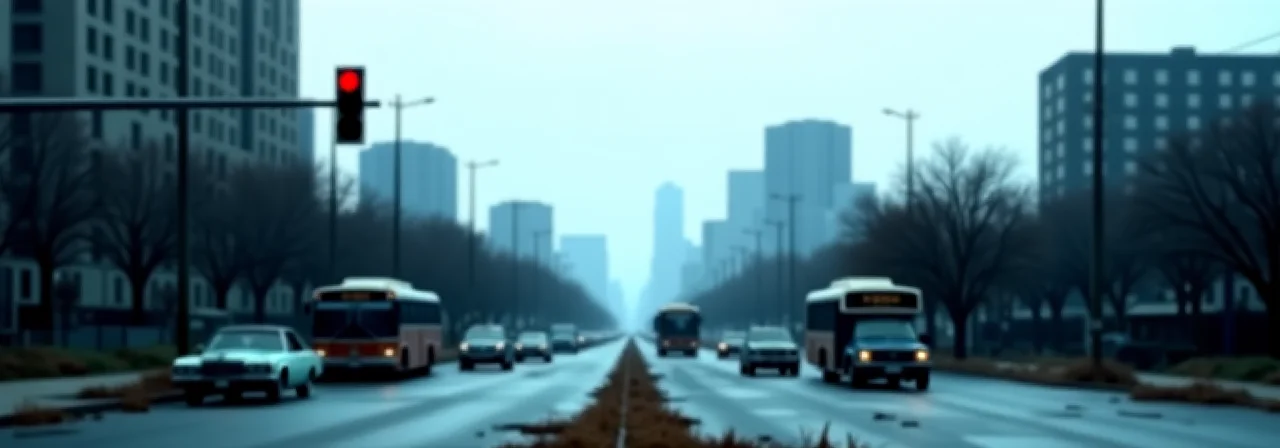
The Black Death killed somewhere between 30 and 60 percent of Europe's population in the 14th century. It took about seven years. What I'm proposing here is worse: half of all humans, worldwide, inside six months. Four billion people dead before anyone figures out how to stop it.
Not a slow burn. A wildfire.
The first month is denial
Governments issue travel advisories. Cable news runs breathless chyrons. People hoard paracetamol and tinned beans. We saw all of this in 2020, and most of us assumed we were overreacting then. The difference here is that by week three, hospitals aren't overwhelmed. They're empty. Not because the crisis has passed, but because the staff are dead or have stopped showing up. There's a critical distinction between a healthcare system under strain and a healthcare system that simply ceases to exist.
Morgues overflow by day ten. By day twenty, nobody is collecting the bodies.
Who keeps the lights on?
The UK's National Grid employs around 8,000 people directly, but the wider electricity system depends on roughly 130,000 workers across generation, transmission, and distribution. Lose half of them at random and you don't get half-functioning power. You get cascading failures, because a gas turbine plant with two operators instead of four doesn't run at 50% capacity. It shuts down entirely when the remaining two can't cover shifts.
Same with water treatment. Sewage processing. Telecommunications. These systems aren't staffed with redundancy for a 50% workforce loss. They're lean operations running close to minimum viable staffing in normal times. Knock out a quarter of the people and you're in crisis. Knock out half and the infrastructure quietly stops.
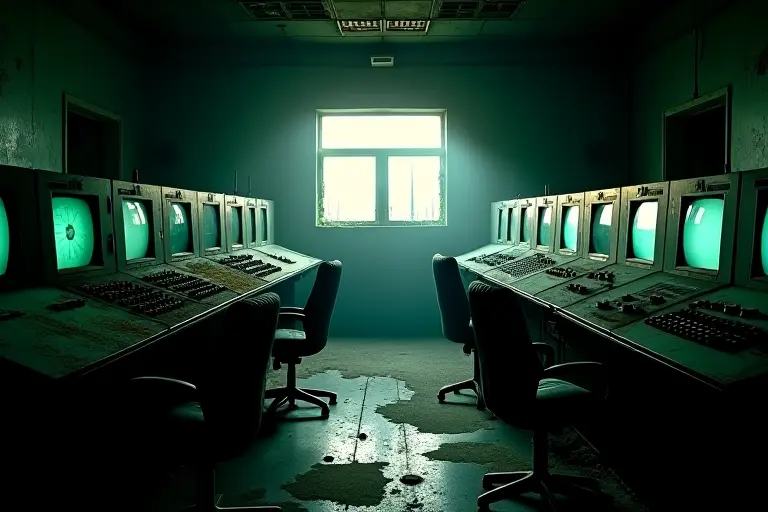
Your fridge goes warm. Your taps go dry. Your phone has no signal. This happens within weeks, not months.
The food problem
Modern agriculture feeds 8 billion people through a chain of staggering complexity. Fertiliser is manufactured in chemical plants, shipped by rail, distributed by lorry, applied by farmers using GPS-guided tractors, and the resulting crop is harvested, processed, packaged, and trucked to distribution centres before reaching your local Tesco. Break any three links in that chain simultaneously and food stops arriving.
After a 50% die-off, you're not breaking three links. You're breaking all of them.
The grain in silos doesn't vanish. Supermarket warehouses still hold stock. But nobody is driving the lorries. Nobody is running the checkout systems. And the food that exists is finite. The UK imports nearly 50% of its food. Those imports stop when ports lose their workers and container ships lose their crews.
Within two months, you're growing your own food or you're fighting someone for theirs.
Grief at scale
Here's the part that scenario planners always undercount: the psychological devastation. Losing half of everyone doesn't mean every person loses exactly half their family. Probability doesn't work that neatly. Some families of five survive intact. Others are wiped out completely. You might lose your partner, both parents, and two of your three children. You might lose nobody and have to listen to your neighbour's screaming through the wall for a week until that stops too.
There's no framework for processing this. No therapist to call, because therapy as a profession requires functioning infrastructure, appointments, payment systems, and therapists who are alive. The mental health crisis after a 50% die-off isn't a policy challenge. It's a species-level trauma with no treatment pathway.
People would stop functioning. Not metaphorically. Literally stop. Sit down and not get up.
The knowledge bottleneck
Here's something that gets overlooked in pandemic fiction: specialised knowledge lives in individual heads. The engineer who knows how your local water treatment plant actually works (not the manual, the real quirks, the valve that sticks, the sensor that lies) is one person. Maybe two. Lose them and you don't just lose workers. You lose irreplaceable operational knowledge that was never written down because nobody thought they'd need to.
Nuclear plants have better documentation than most, thankfully. But "better" is relative. The US alone operates 93 commercial reactors. Each one requires continuous active management. The safety systems are designed for orderly shutdown, and most would manage it. Probably. Some wouldn't, though, and "some" out of 93 is a haunting number when you're talking about unmanaged reactors.
Rebuilding with half a civilisation
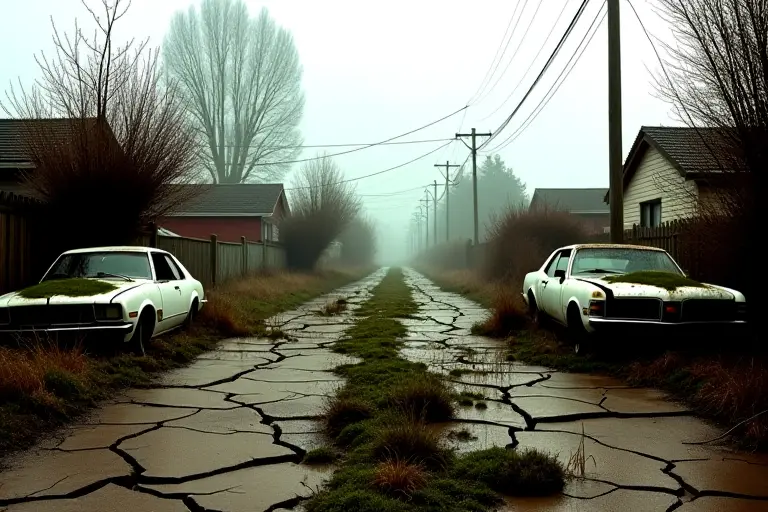
Four billion survivors is, by historical standards, still a lot of people. The world population in 1975 was four billion and civilisation was doing reasonably well. The difference is that 1975's four billion had intact infrastructure, functioning institutions, and knowledge distributed across working systems. Post-pandemic four billion have ruins.
The rebuild wouldn't start immediately. You'd get a period of months, maybe a year or two, of pure survival mode. Small groups forming around whoever had practical skills. A plumber is worth more than a hedge fund manager when the sewage backs up. A farmer is worth more than both when winter comes.
Communities would form along practical lines. Not political, not ideological. Can you grow food? Can you fix an engine? Can you deliver a baby? Right, you're in. Everyone else, grab a shovel and start learning.
What history tells us
After the Black Death, wages in England roughly doubled within a generation. Labour was scarce, so workers had bargaining power for the first time in centuries. The feudal system cracked. Serfdom declined. Land that had been hoarded by a handful of lords sat empty and available. In a horrible, roundabout way, the survivors ended up materially better off.
Something similar would likely happen here, eventually. The surviving population inherits a planet with more resources per person than it had before. Farmland, housing, raw materials, all in surplus relative to demand. But "eventually" is doing enormous heavy lifting in that sentence. The Black Death's recovery took a century. Ours would take longer, because we've built a civilisation that's far more complex and far more fragile.
Your great-grandchildren might live in a world that's recovered. That's cold comfort when you're digging a latrine in your back garden because the sewage system failed in week four.