
There's roughly 8.3 billion tonnes of plastic in existence right now. Some of it is in products you'd miss immediately: your phone case, the IV tubes in every hospital, the seal on your car's fuel system. Some of it is in places nobody intended: the digestive tracts of seabirds, the bloodstreams of Arctic fish, the placentas of unborn humans. Most of it is in landfill, slowly not degrading.
So let's vanish it all. Every molecule of synthetic polymer, everywhere on Earth, simultaneously gone. What actually happens?
The ocean problem gets fixed. Mostly.
The Great Pacific Garbage Patch — that loose aggregation of plastic fragments covering an estimated 1.6 million square kilometres — ceases to exist. The microplastics that have colonised every ocean sediment layer, every marine food chain, every sample of sea salt you've ever sprinkled on food: gone.
For the oceans, this is enormous. Plastic takes centuries to break down, and while it does it fragments into particles that absorb toxins and get eaten by plankton, which get eaten by fish, which get eaten by seabirds or us. Remove all of it overnight and you've undone what might otherwise have taken geological timescales to clear.
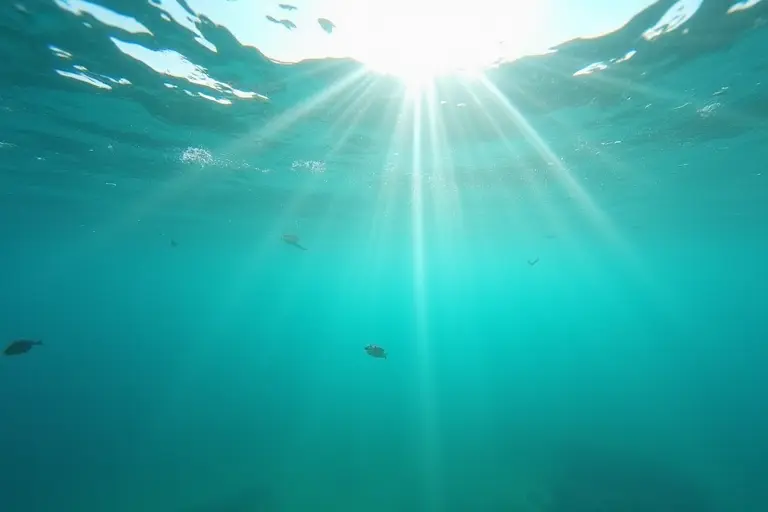
Seabird colonies that currently lose chicks to stomachs full of bottle caps suddenly have a fighting chance. Leatherback sea turtles, which mistake plastic bags for jellyfish with fatal regularity, no longer face that particular hazard. The knock-on effects through marine ecosystems would take decades to fully manifest, but the direction is clear.
The honest caveat: plastic pollution is one pressure on marine life. Overfishing, ocean warming, acidification: those are still there. The oceans improve, but they don't magically heal.
The food system breaks down
Here's where it gets complicated. Modern agriculture runs on plastic. Polythene film covers millions of acres of farmland, warming soil and suppressing weeds. Irrigation systems are mostly PVC. Polytunnels allow British strawberries in May. Seed trays, crop protection netting, pesticide and fertiliser packaging: all gone.
The National Farmers' Union estimates UK farmers alone use around 100,000 tonnes of agricultural plastic annually. Globally, the figure runs into the tens of millions of tonnes. Remove it overnight and harvests in the following season drop significantly. Not to zero; farming existed before plastic. But the transition is violent.
Grain storage is a particular problem. Sealed plastic bags and airtight silos protect stored crops from moisture and pests. Without them, spoilage rates climb sharply. Food that was harvested safely now rots before it can be distributed.
Medicine in crisis
The modern hospital is built from plastic. Syringes, catheter tubes, blood bags, sterile packaging, surgical drapes, disposable gloves, oxygen masks, the housing of every MRI machine, the casings of every monitor. All of it, instantly absent.
You cannot run a hospital without these things. You cannot sterilise reusable equipment fast enough to keep up with surgical demand when your single-use infrastructure has evaporated. Infection rates climb immediately. Elective surgery stops. Intensive care units, which depend on disposable tubing for ventilators and dialysis machines, face genuine catastrophe.
This is the part of the thought experiment that doesn't have a comfortable answer. The plastic pollution crisis is real and serious. The plastic medical infrastructure crisis is also real and serious. These two facts exist simultaneously, and removing all plastic overnight would save millions of species and kill millions of people. That's not a comfortable trade-off to sit with.
The supermarket looks strange
Cardboard, glass, and metal replace plastic packaging, but not immediately, and not without consequence. Glass jars weigh significantly more than plastic bottles, which means distribution costs rise and the carbon footprint of food transport increases. The environmental maths gets complicated quickly.
Fresh produce without plastic film wilts faster. The reason supermarkets use so much single-use packaging for vegetables isn't just laziness — it's that plastic genuinely extends shelf life, reducing the food waste that costs retailers and contributes to greenhouse gas emissions.
Removing plastic from food retail solves one problem and creates several smaller ones. Not insurmountable, just inconvenient in ways the utopian version of this scenario tends to skip over.
The electronics die
Every piece of consumer electronics has plastic in it. Circuit boards use it as insulation and substrate. Connectors, keyboard keys, screen bezels, laptop shells, charging cables, the plastic housing of every router and phone and television. All gone.
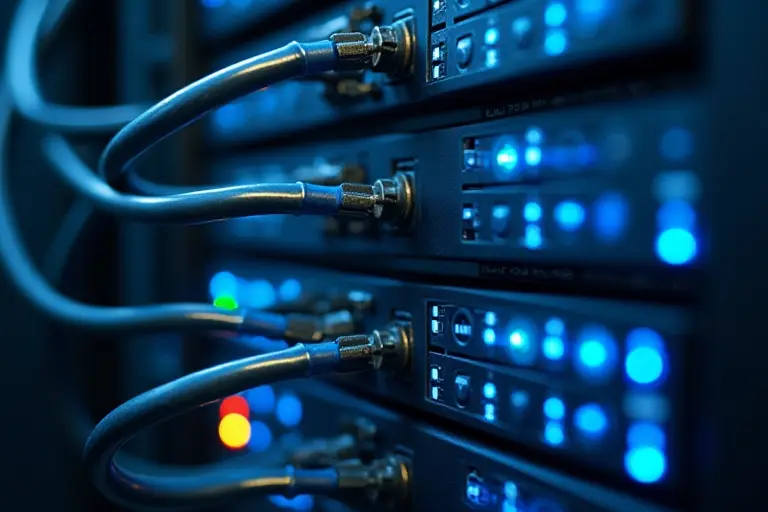
Modern computing infrastructure, including the data centres that run the internet, is similarly dependent on plastic components. The world doesn't just lose its gadgets. It loses a significant portion of global communications and financial systems. The plastic-free morning involves a lot of people discovering they can't make a bank transfer.
Vehicles fare better than phones, but not by much. Car interiors are substantially plastic. Fuel systems use polymer seals and gaskets. Aircraft, which use engineered polymers extensively in both structure and systems, would be grounded.
The environment cleans up, unevenly
On land, the visible plastic (the litter in hedgerows, the bags caught in trees, the takeaway containers floating in urban waterways) disappears. Urban rivers improve. Countryside looks cleaner.
The soil is more complicated. Agricultural plastic breakdown has been leaching phthalates and other plasticisers into farmland for decades. That contamination doesn't disappear with the plastic; it's already in the soil, already in the groundwater, already in the crops. The sudden absence of new input is good news, but the accumulated legacy contamination is there regardless.
What we'd rebuild first
Humans have been shaping materials for about 300,000 years. We'd work out what to replace plastic with fairly quickly. Glass for bottles. Metal for medical tubing where it can be sterilised. More sophisticated ceramics. Bio-derived materials; there's significant research already into bioplastics from agricultural waste, though scaling them is genuinely hard.
The difference is that rebuilding would take years, with meaningful suffering in the gap. The thought experiment conveniently makes everything vanish at once; reality would demand that we choose what to rebuild first. The answer, almost certainly, would be medical supplies, then food storage, then the rest.
Whether we'd make different choices this time: designing for end-of-life from the start, banning microplastic precursors, building collection infrastructure before demand outpaces it. That's the more interesting question. And if the history of asbestos, leaded petrol, and CFCs is any guide, probably not immediately.
We're quite good at learning lessons. We're less good at learning them in advance.