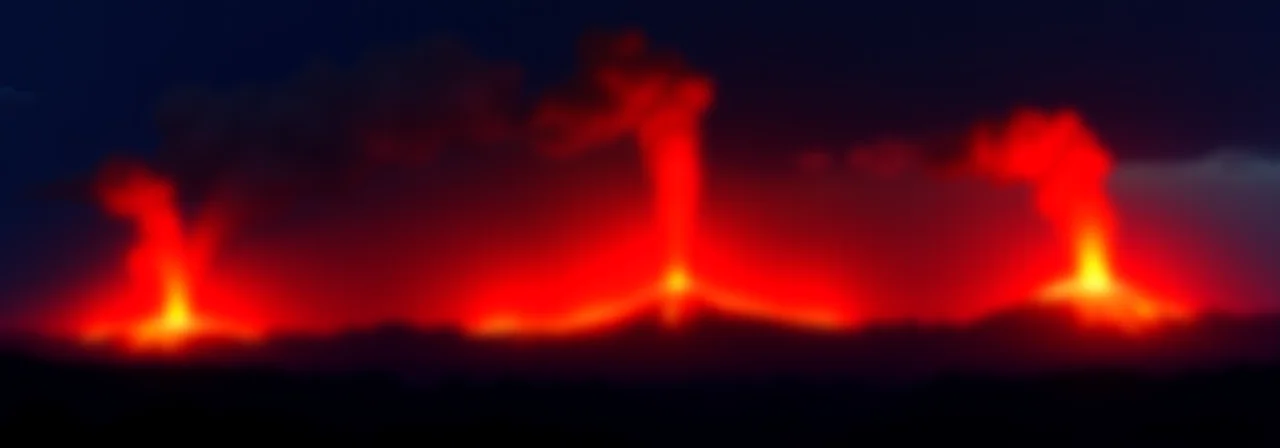
There are approximately 1,350 potentially active volcanoes on Earth. At any given time, around 40 to 50 of them are erupting. Most of these eruptions are small, effusive affairs. Lava flows, gas emissions, the occasional ash plume. The kind of thing that makes local news but doesn't trouble anyone more than a few dozen kilometres away.
Now fire them all at once.
Every active volcano, every dormant volcano capable of eruption, every submarine volcano on the ocean floor. All of them, simultaneously, at maximum output. What happens to the planet?
The first hour
The immediate zone of destruction is surprisingly localised. Volcanoes kill by proximity: pyroclastic flows (superheated clouds of gas and rock travelling at up to 700 km/h), lava flows, lahars (volcanic mudflows), and tephra (falling rock and ash). These are devastating but they have range limits.
Pyroclastic flows rarely travel more than 20 to 30 kilometres from the vent. Lava flows move slowly enough that you can usually walk away from them. The direct kill zone around each volcano is a rough circle of 30 to 50 kilometres radius.
Add up all those circles and you get a surprisingly modest area of direct destruction. Most of Earth's volcanoes are in remote locations: ocean ridges, uninhabited islands, mountain ranges. The populated areas near volcanoes (Naples near Vesuvius, Seattle near Rainier, Kagoshima near Sakurajima) would be catastrophically hit. But the majority of the world's population doesn't live within 50 kilometres of an active volcano.
Direct deaths from lava and pyroclastic flows: maybe 50 to 100 million. Horrifying, but not civilisation-ending.
The civilisation-ending part comes from the sky.
The ash
When Mount Pinatubo erupted in the Philippines in 1991 (the second-largest eruption of the 20th century), it ejected about 10 cubic kilometres of material and enough sulphur dioxide to lower global temperatures by 0.5°C for over a year.
That was one volcano.
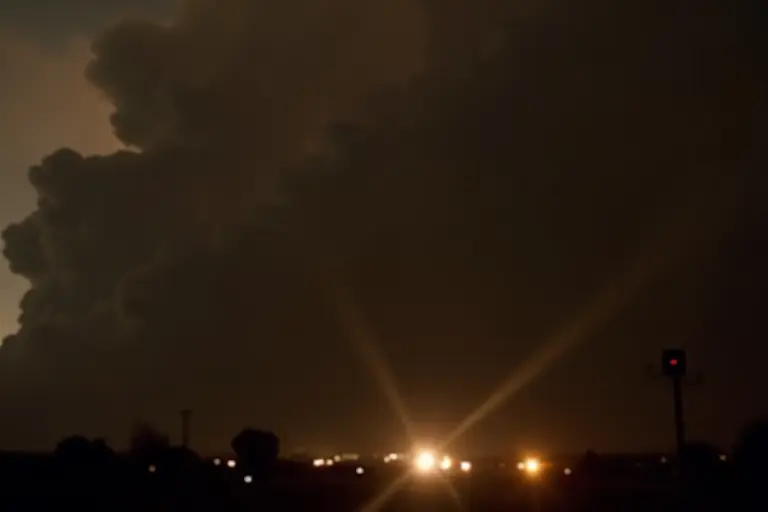
Thirteen hundred volcanoes erupting simultaneously would inject hundreds of cubic kilometres of ash and gases into the atmosphere. The ash column from each major eruption reaches the stratosphere, 10 to 50 kilometres up, where winds distribute it globally within weeks.
Within a month, the sky over most of the planet turns grey. Sunlight reaching the surface drops by 50 to 90 percent depending on location. This isn't overcast weather. This is darkness at midday. Permanent twilight. The kind of conditions that existed after the Chicxulub asteroid impact 66 million years ago, which killed the dinosaurs.
Volcanic winter
Sulphur dioxide reacts with water vapour in the stratosphere to form sulphate aerosols. These aerosols reflect sunlight back into space. Global temperatures begin falling within weeks and continue falling for years.
The 1815 eruption of Mount Tambora in Indonesia (a single eruption, though one of history's largest) ejected enough material to cause the "Year Without a Summer" in 1816. Crops failed across Europe and North America. Snow fell in June. Famine killed tens of thousands. And that was a drop of 0.4 to 0.7°C from one eruption.
Thirteen hundred simultaneous eruptions would drop global temperatures by 10 to 20°C within the first year. Northern Europe, Canada, Russia, and Scandinavia become uninhabitable. The growing season in temperate regions doesn't just shorten. It vanishes. There is no growing season.
Agriculture collapses globally. Not gradually. Almost immediately. Crops need sunlight and warmth, and they're getting neither. Rice paddies in Southeast Asia, wheat fields in the American Midwest, maize across sub-Saharan Africa. None of it grows. The world's food supply, which feeds roughly eight billion people on the assumption of regular harvests, stops.
The oceans
About 75% of all volcanic activity on Earth actually happens underwater, along mid-ocean ridges where tectonic plates spread apart. These eruptions are normally gentle. Hot lava meets cold water, solidifies, and slowly builds new ocean floor.
Scaled up to maximum simultaneous output, submarine volcanism heats the ocean locally and acidifies it globally. Volcanic gases dissolving in seawater produce carbonic and sulphuric acids. Ocean pH drops. Marine organisms that build calcium carbonate shells and skeletons (corals, molluscs, plankton) begin dissolving. The base of the marine food chain disintegrates.
Phytoplankton produce about half of the world's oxygen. If they die in significant numbers, atmospheric oxygen levels don't drop immediately (there's a 21% reservoir to work through and that takes thousands of years) but ocean ecosystems collapse within months. Fisheries, already strained, fail completely.
The air
Volcanoes emit carbon dioxide, sulphur dioxide, hydrogen fluoride, hydrogen chloride, and hydrogen sulphide. Most of these are toxic at high concentrations. At ground level near the eruptions, the air becomes unbreathable. Farther away, it becomes unhealthy. Globally, particulate matter in the atmosphere causes respiratory problems for hundreds of millions of people.
Acid rain becomes widespread. Sulphur dioxide and hydrogen chloride mix with atmospheric moisture and fall as dilute acid. It damages crops (the ones that were already dying from cold and darkness), corrodes infrastructure, and acidifies freshwater sources.
The ozone layer takes a beating. Hydrogen chloride from volcanic emissions destroys ozone in the stratosphere. Reduced ozone means more UV radiation reaching the surface. In a scenario where you might need to grow food under artificial light because the sun is blocked, the sun simultaneously becomes more dangerous when it does break through.
After the eruptions stop
Volcanic eruptions don't last forever. Most run from days to months. A few last years. Even in this worst case, the eruptions wind down over the course of a year or two. The ash starts settling. The skies begin to clear.
But the damage is done. The volcanic winter persists for five to ten years as stratospheric aerosols slowly dissipate. Global temperatures remain depressed. Agriculture takes years to restart even after sunlight returns to normal, because topsoil has been buried under ash, water sources have been acidified, and the seed stock has been eaten or rotted.
Civilisation doesn't necessarily end. Humans survived the Toba supervolcano eruption roughly 74,000 years ago, which may have reduced the global population to as few as 10,000 individuals. But that was a world of scattered hunter-gatherer bands who could move, adapt, and subsist on whatever the land provided. Our world of eight billion people dependent on industrial agriculture and global supply chains is far more fragile.
Estimates vary, but a reasonable projection puts the death toll in the billions. Mostly from famine and its cascading effects: disease, conflict over remaining resources, collapse of medical and sanitation systems. The eruptions themselves are almost incidental. It's what they do to the atmosphere that kills most people, slowly and from a distance.
The lava, as it turns out, is the least of your problems.