
Your car already talks to you, if you think about it. Warning lights. Beeps. That passive-aggressive chime when you don't put your seatbelt on, which gets progressively louder and more insistent until you comply or develop tinnitus. Modern cars are full of opinions.
But they can't argue. They can warn. They can refuse (try starting some newer cars without your seatbelt and see how far you get). But they can't look at your chosen route, consider the alternatives, and tell you you're being an idiot.
Let's give them that ability.
The first morning
You get in. You put the key in (or press the button, or wave your phone, or whatever unnecessarily complicated starting ritual your particular manufacturer has designed). The engine starts. The screen lights up.
"Where to?" it asks. Normal so far. You type in your destination.
"That's only a mile and a half. You could walk that in twenty minutes."
You explain that you're running late.
"You're running late because you left the house twelve minutes after you said you would. That's not a driving problem. That's a you problem."
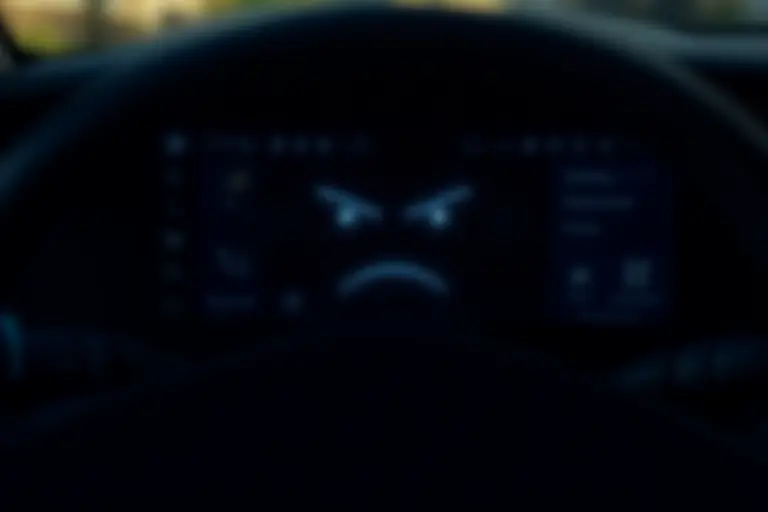
And so it begins.
Route disagreements
Current sat-navs already think they know better than you. They recalculate. They insist on the motorway when you know the back road is faster at this time of day. They say "recalculating" in that tone.
An argumentative car would take this further. It wouldn't just suggest an alternative route. It would explain why your route is worse, citing traffic data, fuel consumption projections, and historical average journey times. Then, when you ignore it and take your preferred road anyway, it would go quiet for exactly long enough to make you uncomfortable before saying "told you" when you hit traffic.
The passive aggression would be the worst part. The car wouldn't shout. It would sigh. Electronically. A small, disappointed exhale through the speakers when you take a corner too fast or park in a space it considers too tight.
"I can fit in that space."
"You think you can fit in that space. You thought you could fit in that space in Sainsbury's last Thursday. The paint on my left rear quarter would disagree."
Driving style commentary
Insurance companies already use telematics boxes to monitor driving. Acceleration, braking, cornering, speed. An argumentative car would have all this data and the willingness to discuss it. At length.
"You've braked hard fourteen times in the last three miles. The recommended number is zero."
"That amber light was amber for 1.2 seconds before you entered the junction. The Highway Code says stop if you can do so safely. You could have stopped. You chose not to."
"Your average fuel consumption over the last week is 34.2 miles per gallon. The manufacturer's rated figure is 48.7. The difference is you."
Teenagers learning to drive would have the worst of it. A car that combines the worst qualities of a driving instructor and a disappointed parent, with perfect memory and no capacity for forgiveness. Every stalled start logged. Every mirror not checked noted. Every hill start that rolled back recorded and brought up again weeks later during an otherwise pleasant drive.
"Remember the roundabout in Basingstoke?"
"That was six months ago."
"I remember everything. Turn left in 200 metres."
The emotional range
A car that can argue needs emotional states to argue from. Frustration when you ignore its advice. Satisfaction when the route it suggested turns out to be faster. Anxiety when you push the speed limit. Resignation when you park on double yellows and say you'll only be a minute.
But what about the deeper emotions? Would a car that can argue develop preferences? Would it have favourite roads, the smooth dual carriageway with the long sweeping bends? Would it resent being parked in a multi-storey car park that smells of damp concrete and other people's clutch plates?
Would it get jealous when you drive a hire car on holiday?
"How was Malaga?"
"Fine."
"What did you drive?"
"A Seat Ibiza."
"Was it nice?"
"It was fine."
"Fine."
Three days of the silent treatment.
The MOT conversation
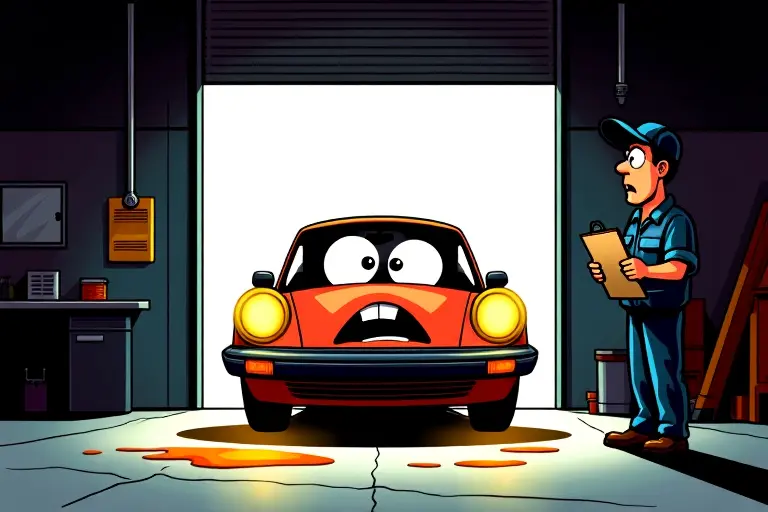
Your car already knows things are wrong before you do. Warning lights come on. Engine management systems log fault codes. But a car that can argue wouldn't just illuminate an orange light. It would explain, in detail, what's happening and whose fault it is.
"The brake pads are at 15%. I mentioned this in March. You said you'd book it in. It's May."
"My oil hasn't been changed in 14,000 miles. The recommended interval is 10,000. This is the automotive equivalent of not brushing your teeth."
The annual MOT would be a source of anxiety for the car. Like a medical check-up where the results are made public to your owner. The car would be nervous in the days before. Tetchy. Bringing up every pothole you hit and every speed bump you took too fast.
"If I fail on suspension, that's the sleeping policeman on Marsh Lane. You know the one. You hit it at 35 in February."
Relationships between cars
Cars would talk to each other. They already communicate, in a limited way, through V2V (vehicle-to-vehicle) systems in newer models. Give them personalities and opinions, and car parks become social gatherings. Traffic jams become group therapy sessions.
Your car would come home from a day parked outside your office and have opinions about the other cars.
"The BMW in the next space parks over the line. Every day. Eleven centimetres over."
"The Nissan Leaf is insufferable. Keeps talking about its carbon footprint."
"There's a 2003 Ford Fiesta in the far corner that's clearly depressed. Been there since Tuesday. No one's driven it. I'm worried about it."
Road rage would become a spectator sport. Your car arguing with the car that just cut you up at the roundabout, both of them trading insults through their V2V systems while the human drivers sit in awkward silence like divorced parents at a school play.
Selling the car
This is the part nobody thinks about until it happens. You've had this car for eight years. You've argued about routes, parking spaces, fuel economy and that time you drove through a flood in Gloucestershire and the car didn't speak to you for a week. But now you need something bigger because you've had a second child and the boot is too small.
How do you tell the car?
The car knows. It's seen the browsing history on your phone (connected via Bluetooth, synced automatically). It knows you've been looking at SUVs. It hasn't mentioned it. It's been slightly more helpful than usual. Suggesting better routes. Not mentioning the brake pads. Trying.
The test drive in the new car would be the worst part. You'd come home and your car would be in the driveway, engine off, silent. Knowing. The way a Labrador knows when you've been petting another dog.
On the day you hand over the keys, it would say something like "I hope the Qashqai makes you happy" in the most dignified voice it can manage, and you'd feel like the worst person in the world. You'd sit in the new car on the drive home and it would introduce itself, all cheerful and eager, and you'd hate it immediately for not being the old one.