
Britain's entire cultural identity is built on weather that's a bit rubbish. Not dramatically rubbish. Not monsoons-and-hurricanes rubbish. Just persistently, greyly, dampenly disappointing. The kind of weather that makes you say "not bad, actually" when it's 17 degrees and partly cloudy in July.
So what happens when you drop the British Isles into the tropics? Average temperatures of 30-35°C year-round. Monsoon seasons. 80% humidity. Palm trees where the oaks used to be. A genuine, no-kidding tropical climate like you'd find in Malaysia or Costa Rica.
Everything breaks.
The infrastructure problem
British infrastructure was designed for a temperate maritime climate. Mild winters, cool summers, rain that's persistent but rarely extreme. The entire system has roughly zero tolerance for tropical conditions.
Start with the railways. Network Rail's tracks buckle at 36°C. That's not a design flaw particular to Britain; steel rails expand in heat, and the continuous welded rail used since the 1960s is laid at a stress-free temperature of around 27°C. Go much above that and the rails push outward, kink, and trains derail. In a tropical UK, 36°C is a cool day. The entire rail network needs ripping up and relaying with expansion gaps or different alloys.
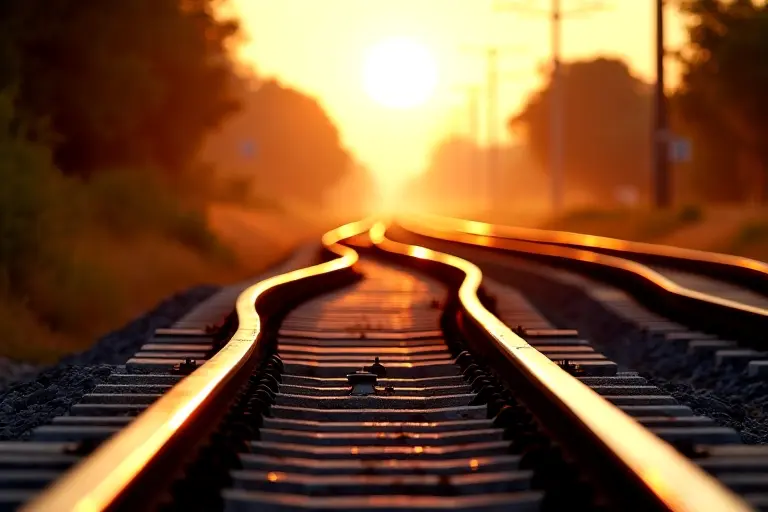
Roads fare no better. UK road surfaces use bitumen-bound asphalt formulated for temperatures between roughly -10°C and 30°C. Above that, it softens. The M25 in a 40-degree heatwave turns into something with the structural integrity of a flapjack. You'd need to resurface every major road in the country with tropical-grade materials, which is a project measured in decades and hundreds of billions of pounds.
And the buildings. British homes are insulated to keep heat in, not out. Cavity walls, double glazing, draught excluders, loft insulation rated to keep your heating bills down in January. In a tropical climate, these features turn every house into a slow cooker. The average UK home has no air conditioning. In 2023, only about 5% of British households had any form of AC unit. You'd go from a nation that considers a desk fan a reasonable summer strategy to one that needs industrial cooling in every building, overnight.
The garden question
The English garden is a cultural institution. Herbaceous borders, rose beds, neatly striped lawns, wisteria climbing over cottage walls. None of it survives a tropical climate.
Roses need a cold dormancy period. Wisteria can handle heat but not year-round tropical humidity and rainfall. The classic English lawn, a mix of perennial ryegrass and fescue, would be outcompeted and overwhelmed by tropical grasses, weeds, and fungi within a single growing season.
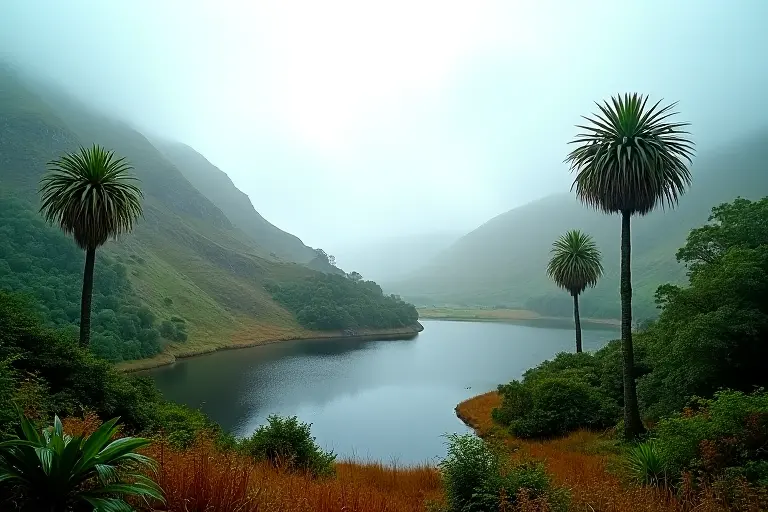
Instead you'd get frangipani, bougainvillea, hibiscus, banana plants. The Lake District would look like Bali. That sounds pleasant until you remember that tropical climates also bring tropical weeds, and they grow fast. A garden left untended for two weeks in a temperate climate gets a bit scruffy. A garden left untended for two weeks in a tropical climate gets eaten by vegetation. You'd come back from holiday to find your shed has been absorbed by something with aerial roots.
The Chelsea Flower Show would need a complete rethink. Though knowing the RHS, they'd find a way to make it work and still charge forty-five quid for entry.
Wildlife and ecology
Britain's native species are adapted to its current climate. Red squirrels, hedgehogs, badgers, foxes. None of them evolved for 35-degree heat and monsoon rains.
Hedgehogs hibernate through winter. Remove winter entirely and they lose a survival strategy they've relied on for 15 million years. Badgers are built for cool, damp conditions and underground setts that stay around 8-10°C year-round. Heat those tunnels to 28°C and you've got a crisis.
Meanwhile, mosquitoes thrive. Tropical Britain would be mosquito paradise. Species capable of carrying dengue, Zika, and malaria would establish breeding populations. The NHS, already stretched, now has to deal with diseases it hasn't seen domestically since the 17th century. Malaria was endemic in the marshy parts of Kent and Essex until the 1800s. It would come back with enthusiasm.
On the upside, you'd probably get parrots. Wild parakeets already live in London (roughly 12,000 ring-necked parakeets at last count, descended from aviary escapees). Give them a tropical climate and they'd spread across the entire country. Which sounds cheerful until you realise they're loud, aggressive, and they eat your fruit crops.
The death of small talk
Here is the real catastrophe.
British conversation relies on weather as a universal, neutral, infinitely renewable topic. "Bit grey today." "Supposed to brighten up later." "Can you believe it's June and I still need a coat?" This is not small talk. This is the load-bearing structure of British social interaction.
In a tropical climate, the weather is the same every day. Hot. Humid. Afternoon thunderstorm at 3pm, sunshine again by 4. There is nothing to discuss. The entire conversational opening gambit that has sustained British social life for centuries simply evaporates.
You'd have to talk about something real instead. Feelings, perhaps. Opinions. Personal matters. The thought is genuinely horrifying to most of the population.
What Britain does well in the heat
Beer gardens. Britain already treats any temperature above 20°C as a legitimate reason to sit outside a pub for six hours. Tropical Britain would make the beer garden a year-round institution. Pubs would expand their outdoor space. Every establishment would have ceiling fans, misting systems, and a permanent barbecue.
Cricket would finally make sense to people who've stood in a field in April, fingers numb, waiting for rain to stop. Tropical conditions are what cricket was designed for. The sport originated in the warm(ish) counties of southeast England but found its spiritual home in the Caribbean, India, and Australia for a reason. Bring those conditions to England and county cricket becomes watchable. Possibly even enjoyable.
Seaside towns would undergo a genuine renaissance. Blackpool, Scarborough, Margate, Skegness. These places were built for domestic tourism and hollowed out when cheap flights to Spain became available. If Britain itself is 33°C with palm-lined beaches, Benidorm loses its entire selling point. Skegness becomes genuinely, unironically "so bracing."
The monsoon
People forget that tropical climates don't just mean heat. They mean rain. Serious rain. A monsoon drops the kind of water volumes that make a British "heavy shower" look like a light mist.
Mumbai receives an average of 2,243mm of rain annually, most of it in four months. London gets about 600mm spread over the whole year. British drainage systems are designed for London-type rainfall. Hit them with Mumbai-type rainfall and they don't gradually struggle. They fail completely. Roads become rivers. Tube stations flood to platform level. Every underpass in the country fills up like a swimming pool.
You'd need to rebuild the entire drainage system. Every pipe, every culvert, every storm drain in every city and town, resized for monsoon volumes. The cost would make HS2 look like pocket money.
The cultural adjustment
Some of it would be welcome. Longer evenings outdoors. Fresh tropical fruit growing in your back garden. Mangoes in Manchester. Never scraping ice off your windscreen again. Never owning a coat.
But Britain's character is shaped by its climate in ways most people don't consciously recognise. The pub exists partly because it's too cold and wet to socialise outside for most of the year. Tea culture developed because you need something warm and comforting when it's 8°C and drizzling in August. The stiff upper lip is, on some level, the psychological posture of a people who've endured centuries of damp disappointment and decided to just get on with it.
Put Britain in the tropics and the weather improves. The culture doesn't survive the upgrade.