Tomorrow morning, every supermarket, corner shop, and takeaway in Britain closes. Permanently. The supply chains stop. The delivery vans park up. The only food you're going to eat from now on is food you personally catch, forage, grow, or pull from the ground with your own hands.
What happens?
Week one: panic and pigeons
The first thing that happens is that everyone with a garden suddenly realises they've been mowing a potential food source for years. Lawns get ripped up overnight. People who've never held a spade in their lives are out there at 6am trying to plant potatoes, not realising potatoes take about 70-90 days to produce anything edible.
In the cities, the situation is bleaker. You can't grow much on a third-floor balcony. So urbanites turn to the one protein source that's immediately available in massive quantities: pigeons.
London alone has an estimated one million feral pigeons. They're everywhere, they're slow, they're trusting, and they've never had a natural predator in the city. By day three, every park in Zone 1 looks like a medieval hunting ground. People fashioning traps from bin bags and string. Accountants chasing birds through Trafalgar Square. It would be farcical if everyone weren't so hungry.
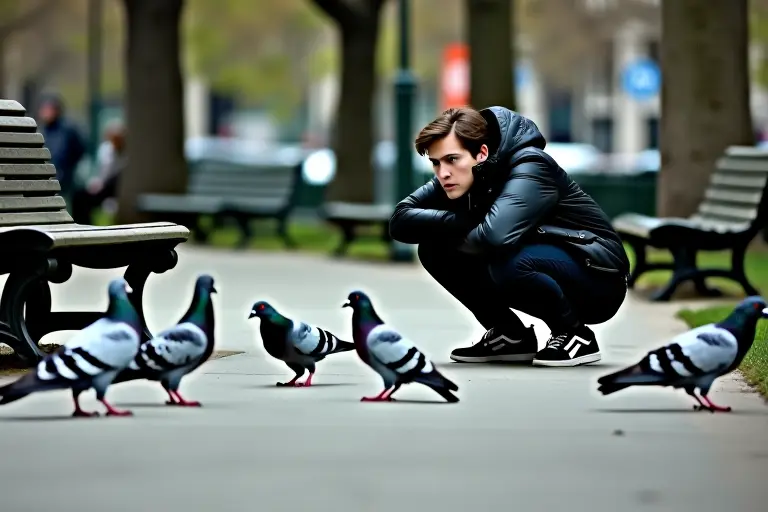
A pigeon yields about 200 grams of meat. That's roughly 240 calories. You need about 2,000 calories a day. So you're catching eight pigeons daily just to break even, and that's assuming you can cook them, which requires fuel, which requires foraging for wood in a city made of concrete.
The maths doesn't work. Not for nine million Londoners competing for the same birds.
The great migration outward
Within two weeks, cities empty. They have to. There simply isn't enough catchable food in an urban environment to sustain a large population. People flood into the countryside, which creates its own problems because the countryside was already occupied by people who got there first and aren't thrilled about sharing.
Rural Britain has deer, rabbits, pheasants, fish, and wild plants. But it doesn't have enough of them for 67 million people. The UK's wild deer population is around two million. Divide that by the population and you get 0.03 of a deer each. Even if you could catch them all (you can't; deer are fast and not stupid), that's a single meal per person and then they're gone.
Rabbits are more numerous. Somewhere around 36 million in the UK. Better ratio, but you're still looking at one rabbit per two people, and a rabbit is maybe 500 calories. Once you've eaten them all, they take about a month to breed a new generation, assuming you left enough alive to breed.
Fishing becomes the most reliable protein source for anyone near the coast or a river. The UK has about 19,000 kilometres of coastline. In theory, you can catch fish indefinitely if you don't overfish. In practice, 67 million amateur fishermen hitting the same waters simultaneously would strip coastal stocks within months. The North Sea cod population, already under pressure from decades of commercial fishing, wouldn't stand a chance.
Gardens become everything
The people who survive long-term are the ones who grow food, not the ones who chase it. Hunting is a terrible calorie strategy. You burn energy pursuing animals that might escape. Gathering is better but seasonal. Agriculture is the only thing that scales.
Britain's allotment system suddenly becomes the most valuable infrastructure in the country. There are about 330,000 allotment plots in England alone. The people who've been quietly growing courgettes and runner beans for years are now the wealthiest members of their communities. Their decades of knowledge about soil, seasons, pest control, and composting are worth more than any university degree.
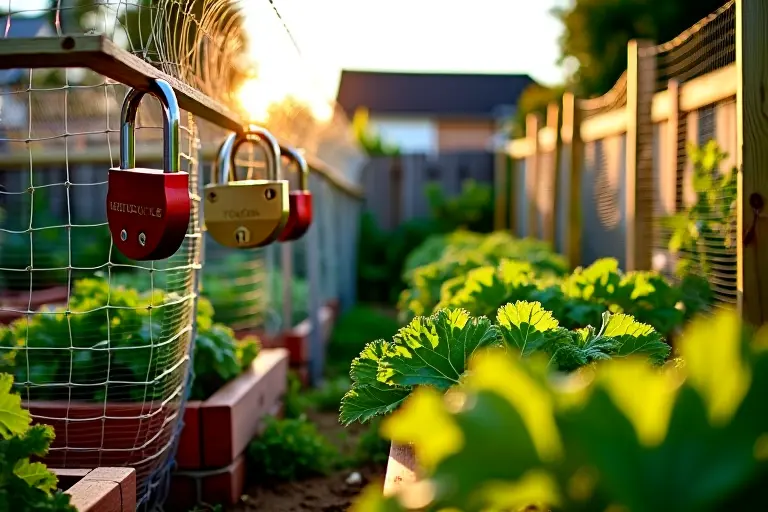
But gardens need protecting. If your neighbour is starving and you've got six rows of potatoes, your relationship changes fast. Allotment theft is already a real problem in Britain (the National Allotment Society reports it every year), and that's when people have Tesco as a backup. Remove the backup and food theft becomes food raiding. Fences go up. Then locks. Then people start sleeping in their sheds with whatever passes for a weapon.
Community gardens either become communal survival operations with shared labour and shared harvests, or they become defended territories. There's probably no in-between.
What you can actually eat in Britain
The British Isles are more generous with wild food than most people realise. Nettles are everywhere and genuinely nutritious (rich in iron, calcium, and vitamins A and C). Dandelion leaves are edible. Blackberries grow wild in every hedgerow from August to October. Wild garlic carpets woodland floors in spring. Hawthorn berries, elderberries, crab apples, sweet chestnuts. Mushrooms, if you know what you're doing, and that "if" is doing serious work because roughly 50 species in Britain can kill you.
Seaweed is an overlooked resource. Kelp, dulse, and laver (the basis of laverbread in Wales) grow abundantly around British coasts and are packed with minerals. Coastal communities would have a significant advantage.
Insects are the elephant in the room that nobody wants to discuss. Britain has plenty of them. Crickets, mealworms, and grasshoppers are all edible and calorie-dense. A hundred grams of dried crickets contains about 120 calories and 13 grams of protein. Gathering them is low-energy compared to chasing deer. But convincing the British public to eat insects might be harder than the food crisis itself.
The fitness revolution nobody asked for
Here's an odd silver lining. Britain in 2026 has an obesity rate of roughly 26% among adults. Within six months of this scenario, that number drops to near zero. Not through any wellness programme or government initiative, but because catching and growing your own food is relentlessly physical work.
Digging a garden by hand burns about 400 calories per hour. Walking to check snares burns more. Hauling water from a stream (because the mains supply depends on infrastructure that's degrading without maintenance) burns more still. You're working physically all day, every day, and eating fewer calories than you burn for the first few months until your garden starts producing.
The nation gets thin. Then lean. Then, for the unlucky ones, dangerously underweight. The fitness revolution and the famine are the same event viewed from different stages.
Skills that suddenly matter
Your ability to use spreadsheets is worthless. Your knowledge of Photoshop, irrelevant. Your law degree, pointless. The hierarchy of useful skills inverts completely.
Farmers become the most important people in the country. Then gamekeepers. Then fishermen. Then anyone who can identify wild plants without poisoning themselves. Then people who can build and maintain water systems. Then people who can preserve food through smoking, salting, pickling, or drying.
Your gran who made jam every summer and kept chickens in the back garden? She's the new local authority.
Where we end up
Before the agricultural revolution, the British Isles supported a population of maybe 5,000-20,000 hunter-gatherers. Agriculture pushed that number up dramatically, but agriculture takes time to establish, requires seeds (where do you get seeds when the garden centres are closed?), and depends on knowledge that most of the population doesn't have.
Realistically, Britain could probably sustain about 10-15 million people through a combination of small-scale farming, fishing, foraging, and livestock (the existing sheep, cattle, and chickens don't disappear, though without feed supplies they become free-range very quickly). That leaves over 50 million people competing for insufficient food.
The British would cope better than some nations and worse than others. We've got a mild climate, reliable rainfall, and thousands of years of agricultural history encoded in the landscape. We also have one of the highest population densities in Europe and a workforce that's spent the last fifty years moving away from manual food production.
I suspect the real story of this scenario wouldn't be the hunting or the foraging. It would be the cooperation. The communities that share knowledge, divide labour, and distribute food fairly would survive. The ones that hoard and fight wouldn't. That's been the pattern for the entire history of the species, and I don't see why a food crisis would change it.