
A typical sneeze registers at about 80 decibels. Loud, but in the same range as a food blender or a busy restaurant. You can sneeze in a meeting and people will say "bless you" and move on. Nobody calls emergency services.
Thunder, depending on proximity, hits 120 decibels. That's the same as a chainsaw held at arm's length, a rock concert at the front row, or a jet engine from 100 metres away. At 120 decibels, the threshold of pain kicks in. Your ears physically hurt.
Now make every sneeze that loud.
The immediate problem
The average person sneezes about four times a day. Some estimates put it lower, some higher, but four is a reasonable middle ground. That's four 120-decibel blasts, each lasting about 0.5 seconds, delivered from a point source approximately 15 centimetres from your own eardrums.
Your ears would take the worst of it. Sustained or repeated exposure above 85 decibels causes permanent hearing damage. A single exposure above 120 decibels can cause immediate harm to the hair cells in your cochlea. These cells don't regenerate. Every sneeze is a small, irreversible step toward deafness.
A person with hay fever sneezes 20 to 30 times a day during pollen season. That's 20 to 30 concussive blasts. By July, they'd have the hearing profile of a retired artillery gunner.
The sneeze radius
Sound intensity drops with the square of the distance. At 120 decibels at source, a sneeze would still be about 100 decibels at two metres away. That's a motorcycle passing you on the street. At five metres, roughly 90 decibels, still louder than a lawnmower. You'd need to be about 30 metres from someone sneezing to bring the sound below the 70-decibel level of normal conversation.
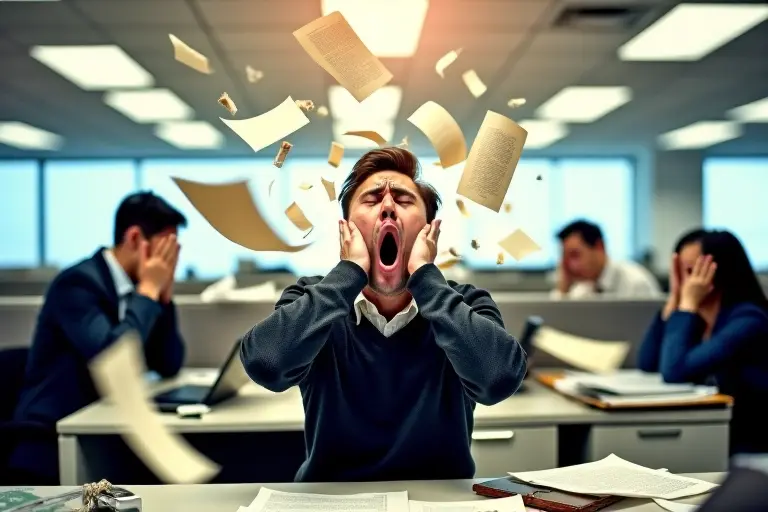
Open-plan offices would become untenable. One person catching a cold would sonically dominate a floor plate. Meeting rooms, with their hard walls and sound-reflective surfaces, would amplify the problem. A sneeze in a conference room bounces off every surface. People closest to the sneezer would experience something approaching a stun grenade.
Libraries would need to rethink their entire model.
Infrastructure changes
Building codes would adapt, slowly and expensively. Office cubicle walls, currently about 120 centimetres tall and made of fabric-covered foam, would need to be replaced with floor-to-ceiling sound-dampening panels. Restaurants would install acoustic partitions between tables. Cinemas would require sneeze-rated sound insulation or face lawsuits from patrons with burst eardrums.
Public transport would be a nightmare. A London Underground carriage during rush hour holds about 150 people in a sealed metal tube. One sneeze and everyone within three metres has a ringing in their ears that lasts for hours. The Tube already has noise levels around 105 decibels from wheel screech alone. Add thunder-sneezes and the cumulative noise exposure from a single commute would exceed workplace safety limits.
Schools would need sneeze protocols. Sick children would be sent home not because they might infect others but because they pose an acoustic hazard. Classrooms would have designated sneeze corners, ideally padded, where children would run before sneezing. The visual of 30 eight-year-olds ducking under their desks every time someone's nose twitched is both horrifying and genuinely funny.
Hearing protection becomes mandatory
Ear protection would be as ubiquitous as shoes. You'd carry earplugs the way you carry your keys and phone. Construction workers already wear ear defenders as standard equipment. In a thunder-sneeze world, so would teachers, baristas, bus drivers, and dentists.

Fashion would absorb this. Noise-cancelling earbuds are already socially acceptable. In this reality, they'd be as standard as wristwatches were in the 1950s. High-end brands would sell designer ear defenders. There would be a thriving market for discreet, attractive hearing protection that you wear every waking moment.
Babies, who can't wear ear protection and sneeze frequently, would present a genuine public health challenge. A newborn's sneeze in a maternity ward, at 120 decibels, would blast the other infants repeatedly. Neonatal units would need individual sound-isolated pods. The cost would be enormous.
The social consequences
Sneezing is currently a mild social event. You sneeze, someone blesses you, everyone moves on. At 120 decibels, a sneeze is an assault. People would flinch, drop things, spill drinks, swerve cars. Sneezing in a quiet restaurant would be the equivalent of setting off a car alarm indoors.
Road safety would deteriorate. A driver sneezing already closes their eyes for about 0.3 seconds. Add a 120-decibel blast inside a car cabin and you've got temporary hearing loss, startled passengers, and the driver's entire body convulsing from the force. Rear-end collisions on motorways during pollen season would spike dramatically.
Allergies would become a disability classification. People with chronic rhinitis or dust allergies, who currently manage their condition with antihistamines and mild annoyance, would instead face a daily barrage of self-inflicted noise trauma. Employers would need to make reasonable adjustments. "Sorry I can't come in today, my hayfever is a health and safety risk" would be a perfectly valid sick note.
The antihistamine economy
Hayfever medication sales in the UK alone are worth about 400 million pounds annually. In a thunder-sneeze world, that figure would multiply by an order of magnitude. Antihistamines wouldn't be a seasonal convenience. They'd be critical infrastructure. Governments might subsidise them the way they subsidise insulin.
Pharmaceutical companies would pour billions into sneeze suppression research. Not allergy relief but actual sneeze prevention. A drug that could eliminate the sneeze reflex entirely, without side effects, would be the most profitable pharmaceutical product in history. The company that cracked it would make Pfizer's COVID vaccine revenue look like pocket change.
There would be surgical options. The sneeze reflex is mediated by the trigeminal nerve. Severing or dampening specific branches of this nerve could theoretically suppress sneezing, at the cost of reduced facial sensation. Some people would take that trade. Others would consider it a step too far.
Could you suppress it?
People already try to hold in sneezes. Doctors universally advise against this because the pressure has to go somewhere. A suppressed sneeze can reach pressures 20 times higher than an unsuppressed one, risking ruptured blood vessels, damaged eardrums (your own, from internal pressure), and in rare cases brain aneurysm.
At 120 decibels, the incentive to suppress would be enormous. The medical consequences of suppression would also be enormous. People would face a genuine dilemma every time their nose tickled: unleash a thunderclap or risk blowing out a blood vessel in your eye.
Pepper would be reclassified as a dangerous substance. Pepper mills in restaurants would be kept behind the counter, dispensed by trained staff wearing hearing protection. Someone grinding pepper over your carbonara while you sit two feet away would be an act of reckless endangerment.
Cats, dogs, and other animals that sneeze would pose domestic hazards. A cat sneezes about once or twice a day. Your tabby would periodically detonate at 120 decibels with no warning, no consideration, and absolutely no remorse. Dog owners would have it worse. Larger nasal cavities, louder output. A Great Dane's sneeze might hit 130.
You'd get used to the sound, eventually. Humans adapt to almost anything. But you wouldn't get used to the hearing loss. That part just accumulates, quietly and permanently, one blessed sneeze at a time.