
One morning, every species that ever went extinct reappears. Not gradually. Not through some carefully managed de-extinction programme where scientists spend a decade reconstructing mammoth DNA. All of them, all at once, dropped into the modern world with viable breeding populations.
We're talking about a lot of animals. Over 99% of all species that have ever lived on Earth are extinct. The total number is estimated at somewhere between 5 billion and 50 billion species across 3.8 billion years of life. Most were bacteria, fungi, and marine invertebrates that nobody would notice. But plenty were large, visible, and extremely inconvenient.
The dinosaur problem
The first thing everyone would think about is Tyrannosaurus rex, so let's get it out of the way. T. rex lived in what is now western North America, about 68 million years ago. It was roughly 12 metres long, weighed between 8 and 14 tonnes, and could bite through bone with a force of about 57,000 newtons. For comparison, a saltwater crocodile, the strongest bite of any living animal, manages about 16,000 newtons.
A T. rex appearing in modern Montana would be confused, angry, and hungry. It evolved for a world with an average temperature about 4 degrees Celsius warmer than today, higher oxygen levels, and prey animals it could recognise. Modern Montana in October is cold, dry, and full of creatures it has never seen. The elk and bison are smaller than what it's used to eating. The terrain is open grassland where it evolved in semi-forested floodplains.
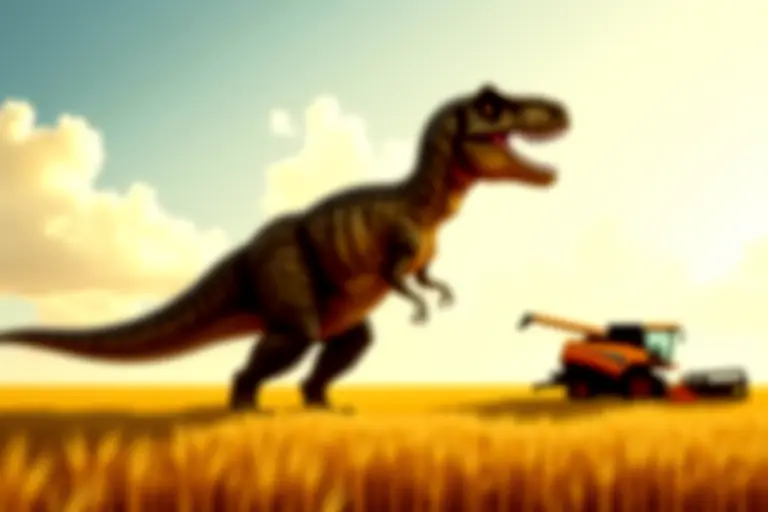
It would also have no natural fear of humans, cars, buildings, or power lines. A 10-tonne predator walking through a town is not a problem you can solve with animal control. You'd need the military, and even then the optics of a Chinook helicopter gunning down the most famous animal in history would be challenging for the PR department.
But T. rex is one species. The Mesozoic era produced thousands of large dinosaur species. Sauropods like Argentinosaurus, 30 to 40 metres long and weighing 70 tonnes. Packs of Velociraptors (smaller than the films suggest, about the size of a turkey, but with a sickle claw and genuine malice). Pteranodons with 7-metre wingspans colliding with passenger aircraft.
Aviation would shut down within hours.
The megafauna mess
Dinosaurs get the headlines, but the recently extinct megafauna would cause more practical chaos because they'd appear in places humans currently occupy densely.
Woolly mammoths across Siberia and northern Canada. Giant ground sloths in South America, some of them 6 metres tall and weighing 4 tonnes. Glyptodonts, which were essentially armoured Volkswagen Beetles with tails. Short-faced bears in North America, significantly larger than grizzlies and built for chasing prey at speed. Irish elk with antlers spanning 3.5 metres, returned to a country that has virtually no forest left for them to live in.
The dodo comes back to Mauritius, which is now 42% farmland and has a population density of 626 people per square kilometre. The dodo went extinct partly because it had no fear of humans. It still doesn't. It waddles up to tourists. It's endearing for about a week until the conservation implications sink in and someone has to explain to a resort developer that this bird now has legal protection.
Ecosystems can't cope
Modern ecosystems evolved without these species. That sounds obvious, but the consequences are severe. Every ecological niche is occupied. Food chains are balanced (precariously, in many cases) around the species that currently exist. Dropping millions of additional species into this system is like adding 500 new players to a football match already in progress.
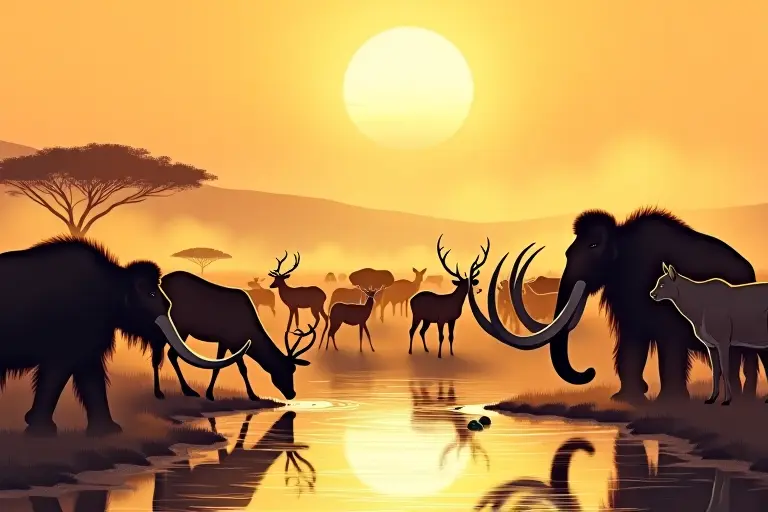
Predators would devastate prey populations that haven't evolved defences against them. Herbivores would strip vegetation that can't regrow fast enough. Parasites and pathogens that went extinct with their hosts would return, potentially jumping to modern species that have no immunity. The chestnut blight that wiped out 4 billion American chestnut trees came from a single imported fungus. Imagine thousands of such pathogens arriving simultaneously.
Marine ecosystems would be even worse. The oceans once contained predators like Megalodon, a shark estimated at 15 to 18 metres long with jaws wide enough to swallow a great white shark whole. Modern marine mammals, the whales and seals that filled ecological roles after the Mesozoic, would suddenly face predators they have no evolutionary preparation for.
The great whales, already recovering slowly from industrial whaling, would be hunted by animals far more efficient than any harpoon ship.
The conservation budget
Currently, global spending on wildlife conservation is roughly 21 billion dollars per year. This is considered woefully inadequate for protecting the species we already have. Now add every extinct species. Billions of them.
Most wouldn't need active conservation. Bacteria and marine invertebrates would find their own level. But the charismatic megafauna, the ones the public cares about, would all need habitat, protection, monitoring, and management. Where do you put the mammoths? Their historic range is now farmland, cities, and infrastructure. The Siberian steppe could absorb some, but the woolly mammoth's range once extended from Spain to Canada. Reintroducing them across that range means renegotiating land use across dozens of countries.
Zoos would become the most important institutions on Earth overnight. Every zoo would need to house species they've never seen alive, with no husbandry guides, no veterinary literature, no dietary research. What does a Stegosaurus eat? Probably ferns and low-growing vegetation, based on its tooth structure and height. How much? Nobody knows. What diseases does it get? Nobody knows. What temperature does it need? We can guess, based on the Jurassic climate, but a guess is all it is.
The budget wouldn't just explode. It would become the single largest line item in every government's spending. Defence budgets would be redirected, partly because some of these returnees are genuinely dangerous and the army is now handling wildlife management.
The ones we'd actually want back
Not everything that went extinct was a 10-tonne predator. Some of the losses were genuinely tragic and their return would be welcomed.
The passenger pigeon, once the most abundant bird in North America with flocks of 3 to 5 billion individuals, went from ubiquity to extinction in about 50 years due to commercial hunting. Seeing those flocks again, darkening the sky for hours as they passed overhead, would be extraordinary. It would also be a logistical nightmare, since those flocks deposited guano in quantities measured in tonnes per hectare and stripped forests of nuts and berries.
The thylacine, or Tasmanian tiger, would return to an Australia that has spent the last century pretending to regret killing it off. The Steller's sea cow, a gentle 8-metre marine herbivore hunted to extinction within 27 years of its discovery by Europeans, would be back in the North Pacific. The great auk, the original penguin of the Northern Hemisphere, would reclaim the rocky North Atlantic islands now used for seabird research stations.
We'd celebrate these returns. We'd put them on stamps and documentaries. And within a decade, we'd be complaining about the passenger pigeons destroying crops, the thylacines eating livestock, and the great auks getting in the way of fishing boats. Because that's what we do. We mourn what we've lost, romanticise its return, and then resent it for being inconvenient.