
You're born. The doctors clean you up, clamp the cord, and check your vitals. Then someone rolls up your tiny wrist and stamps a date on the inside in permanent, unfadeable ink. Not a birthdate. An expiry date.
17 March 2098. That's you. Seventy-two years, give or take the hours.
The stamp is accurate to the day. No margin of error. No appeals process. When the date arrives, you stop. Not an illness, not an accident. You simply reach the end of your allotted time, like a clock winding down to zero.
The first thing that changes is childhood
Parents check the stamp before they check the birth weight. And for most, it's fine. Eighty-three years. Ninety-one. A collective exhale in the delivery room.
But some parents look at a stamp that reads 2049 and realise their child will die at twenty-three.
How do you raise a child you know won't reach thirty? Do you push them through school, exams, university applications, knowing none of it leads anywhere long-term? Do you tell them early? Do you lie? The parenting books don't cover this.
Short-stamped children would become visible in schools. Not because the stamps are public (let's say they're not, legally) but because kids talk. Someone sees it in the changing room. Someone's parent lets it slip. By secondary school, everyone knows who's got a short stamp and who hasn't. The social dynamics of that are grim. Do you bully the kid who won't be here in ten years, or do you leave them alone out of guilt? Both happen.
Dating gets a new filter
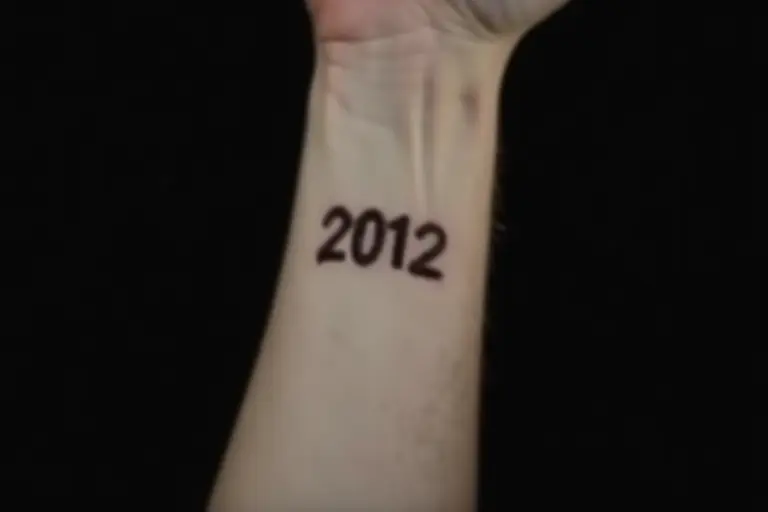
Every dating profile now has a field that matters more than height, star sign, or political affiliation. Your expiry date. Compatibility algorithms would weight it heavily, because nobody wants to fall in love with someone who expires in four years. Or maybe some people specifically do. There's probably a subculture for that.
"I don't date anyone with less than thirty years remaining" sounds heartless typed out, but it's the same logic that makes people hesitate about partners with terminal diagnoses now. The stamp just makes the calculation explicit.
Marriage becomes an actuarial exercise. Wedding vows already say "till death do us part," but when death has a confirmed booking, the phrase hits differently. Prenuptial agreements would reference expiry dates as standard. Life insurance wouldn't need to exist at all. The uncertainty that insurance covers has been removed.
Retirement is either irrelevant or infinite
The pension system collapses overnight. The entire model assumes uncertainty about when people die. Actuaries build tables of probability. Fund managers invest based on expected distribution curves. All of that becomes pointless when every citizen's death date is known from day one.
Governments could calculate pension obligations to the penny. No shortfalls, no surpluses, no guesswork. In theory, this is better. In practice, it means your pension contribution is personalised. Someone stamped with 94 years pays in for decades. Someone stamped with 52 pays almost nothing, because the system knows they'll never collect.
And what about someone stamped with 112? They retire at 67 and live another 45 years on state pension. The Treasury would quietly prefer those people didn't exist.
Crime changes shape
A twenty-year prison sentence means something different when the judge knows the defendant expires in six years. Is a life sentence still life if your life has a known endpoint of next Tuesday? Does the death penalty become redundant when everyone already has a scheduled death?
More disturbingly, what happens to someone who kills a person on the day before their expiry date? You've stolen one day. Technically. The philosophical and legal arguments about the value of that single day would occupy courts for decades.
And then there's the question of whether the stamp can be wrong. Can you die before your date? If someone is murdered at 30 with a stamp of 85, does the stamp retroactively look like an error, or does it mean that in the absence of murder, they would have lived to 85? The metaphysics are a headache.
Religion either thrives or shatters
The stamp implies a stamper. Something or someone determined, at the moment of birth, exactly when you would die. For religious people, this might confirm divine planning. Everything happens for a reason. Your time is allocated by God.
For others, the stamp's existence without an obvious mechanism is deeply unsettling. It suggests determinism at a level that makes free will feel like a marketing slogan. If your death is fixed, what else is?
Suicide becomes philosophically tangled. Can you die before your stamp date by your own hand? If you can, the stamp isn't a guarantee, it's a maximum. If you can't, then every suicide attempt by someone before their date would fail. Which is its own kind of horror.
The short-stamp underground

People stamped with short lives would form their own communities. Bars, clubs, forums, support groups. Some would be defiant and hedonistic. If you're expiring at 28, the concept of long-term consequences evaporates. Credit scores don't matter. Mortgages are irrelevant. Saving for retirement is a joke.
Banks wouldn't lend to short-stamped people. Why would they? The loan outlives the borrower. Employment would discriminate regardless of the law, because training someone who'll be dead in two years is a poor return on investment. Housing, insurance, education, healthcare resources: all of it tilts toward the long-stamped.
A two-tier society, stratified not by wealth or race but by time remaining. The long-lived and the short-changed.
Would people want to know?
There's a real-world parallel here. Genetic testing can already reveal predisposition to conditions like Huntington's disease, which is effectively a slow-motion expiry stamp. About 75% of people at risk for Huntington's choose not to get tested. They'd rather not know.
But in our scenario, you don't get that choice. The stamp is there on your wrist from day one. Some people would cover it. Tattoo over it, wear long sleeves year-round, have it surgically removed (though the information is on your birth certificate anyway). Others would display it proudly. Ninety-seven years. Look at me. I'm going to be here when you're all gone.
The smugness of the long-stamped would be unbearable.
The last day
Here's the part that actually keeps me up at night. Everyone knows exactly when their last day is. There's no ambiguity, no "could be tomorrow, could be forty years." You know.
Some people would spend that final day surrounded by family. Others would spend it alone, because watching someone you love count down their final hours is a specific kind of cruelty that not everyone can stomach.
Sinead, who sat next to me in sixth form, once said the best thing about life is that you don't know when it ends. She said it while eating a bag of Skips, so the profundity was slightly undermined. But she was right. Uncertainty about death is what makes us plan, hope, take risks, and bother getting out of bed on a rainy Wednesday. Fix the date and you don't get certainty. You get a countdown. And countdowns aren't the same as living.